Private vs. Group Spanish Lessons in Costa Rica: Which Is Right for You?
Choosing a Spanish course in Costa Rica involves an important decision: learn privately with one instructor or alongside students in a small group.
Both formats can help you make meaningful progress. The better option depends on your goals, personality, available time, and preferred learning environment. A traveler preparing for a specific work situation may need something different from a beginner seeking general conversation practice.
This guide compares private vs. group Spanish lessons in Costa Rica so you can choose with realistic expectations—and spend your study time in the format that fits you.
The Short Answer: Private or Group Spanish Lessons?
Choose private Spanish lessons if you want the class built around your pace, specific goals, or individual questions. One-to-one instruction can be especially useful when you have a narrow professional focus, an unusual level profile, limited time, or a strong preference for individual feedback.
Choose small-group Spanish lessons if you want structured learning with several conversation partners, shared energy, and the chance to learn from other students’ questions. A genuinely small group can still provide personal attention while giving you practice understanding different voices and communication styles.
Neither format is automatically more effective. Appropriate placement, good instruction, consistency, and your willingness to use Spanish all matter.
How Private Spanish Lessons Work
In a private class, the instructor’s attention stays on one student. Lessons can respond closely to your pace, strengths, gaps, and reasons for learning Spanish.
Strong one-to-one instruction still benefits from a clear learning path, but the teacher has more room to adjust the route. If you need extra work with past tenses, pronunciation, listening, or specialized vocabulary, the lesson can spend more time there. If you already understand a topic, you may be able to move forward.
Private lessons may suit you if:
You have a specific professional, academic, or travel goal.
Your Spanish skills are uneven—for example, strong reading but limited speaking.
You want frequent correction and direct feedback.
You feel more comfortable trying new language one-to-one.
You have limited study time and want every lesson centered on your needs.
You are returning to Spanish after a long break and need a tailored review.
The tradeoff is intensity. In a one-to-one class, you are involved almost continuously, with fewer moments to listen while someone else speaks or gather your thoughts. Many students appreciate that focus, but it requires energy—especially in a fuller weekly program.
How Small-Group Spanish Lessons Work
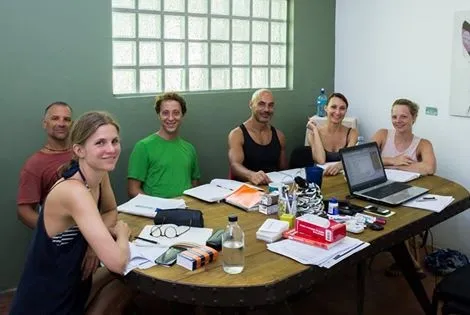
Group classes vary widely, so the size matters. A crowded class can limit speaking time. A small group is different: each student can participate while the teacher creates conversations, paired practice, and shared problem-solving.
At Nosara Spanish Institute, a typical group has two to four students, with a maximum of six. Students are placed according to their Spanish level using a written assessment and oral verification. This helps keep the class appropriately challenging while still allowing the teacher to respond to the people in the room.
Small-group lessons may suit you if:
You enjoy learning through interaction and shared conversation.
You want to hear questions and examples from other learners.
You benefit from a regular structure and group momentum.
You want multiple conversation partners during the week.
You are comfortable making mistakes in front of a few classmates.
You want to balance personal attention with a collaborative experience.
Group learning provides real-time communication among people who express themselves differently. You practice taking turns, asking follow-up questions, and finding another way to explain an idea when the first attempt does not work—useful skills outside school, where conversations rarely follow a script.
The tradeoff is that the lesson cannot revolve around one person. The teacher needs to balance the group, and the class pace must work for everyone. Good placement helps, but classmates will never have identical strengths or goals.
Private vs. Group Spanish Lessons: A Practical Comparison
Attention and feedback
Private lessons provide the most individual attention. The instructor can notice patterns in your speech, correct recurring errors, and shape practice around them.
In a small group, feedback is shared, but you also learn from corrections and explanations given to classmates.
Speaking and listening
Private instruction can maximize your direct speaking time with the teacher. It is a strong choice when you want sustained practice and immediate responses.
Small groups provide a wider listening environment. You speak with the instructor and classmates while practicing how to enter a discussion, clarify, agree, and respond naturally.
Pace and content
A private course can follow your pace and emphasize a specialized goal. This is useful for medical, professional, relocation, or personal learning needs.
A group course follows a shared level and curriculum. At NSI, the curriculum is informed by the Common European Framework of Reference for Languages (CEFR), while instructors respond to the group’s progress and interests. You still receive guidance, but the content must remain useful to the class as a whole.
Classroom atmosphere
Some students relax more in a private lesson because there is no audience. Others find one-to-one study intense and speak more freely when attention is distributed across a small group. Choose the setting where you are most likely to take risks, ask questions, and keep speaking after a mistake.
Cost and value
Group instruction generally spreads teaching costs across several students, while private instruction reserves the teacher for one learner. Rather than comparing price alone, consider what you need from the week.
If your goals are broad, a well-placed small group may offer excellent value. If you need concentrated help with a specific skill or have little time, private instruction may be worth it. Always review current program details before booking because rates and inclusions can change.
Should You Choose a 10-Hour or 20-Hour Program?
Format is only half the decision. You also need to choose the intensity of your Spanish program.
NSI offers both group and private instruction in 10-hour and 20-hour weekly formats. Classes are organized into daily teaching blocks, with scheduled breaks between blocks in the fuller program.
The 10-hour option provides one class block each weekday. It can fit students combining Spanish with work, family responsibilities, surfing, yoga, or a slower-paced visit.
The 20-hour option provides two class blocks each weekday and is NSI’s recommended immersion format. The additional guided time creates more room for conversation, feedback, and review.
More hours are not automatically better for every traveler. If Spanish is the central purpose of your trip, the fuller format may make sense. If your visit has competing priorities, a lighter schedule may be more productive.
Can You Combine Group and Private Learning?
For some students, the answer is not either-or. A small-group program can provide the main structure while targeted private instruction addresses a particular need. You might also begin with online Spanish lessons before traveling or continue after returning home.
A blended approach may be helpful when you:
Enjoy a group but want extra pronunciation or grammar work.
Need vocabulary for a profession or upcoming event.
Want preparation before arriving in Costa Rica.
Would like continued accountability after an immersion week.
Ask about scheduling before planning a combination, since teacher availability and timetables can vary.
What Matters More Than the Format
Whether you choose private or group Spanish lessons, a few factors will shape your experience more than the label on the course.
Appropriate placement
A class that is too easy can feel repetitive, while one that is too advanced can make participation frustrating. A written test and oral verification together provide a clearer picture of what you can use in real time.
Active participation
Spanish immersion does not happen automatically because you are in Costa Rica. In Nosara, you will encounter both Spanish and English. Progress also depends on choosing to greet people, order, ask questions, and stay in conversations in Spanish.
A realistic goal
One week can build confidence, clarify difficult concepts, and establish better habits, but it cannot guarantee fluency. Define useful progress: handling travel exchanges, speaking with less hesitation, improving one grammar area, or sustaining longer conversations.
A Simple Decision Guide
Choose private instruction if your first priority is customization, concentrated feedback, or a specialized goal.
Choose a small group if your first priority is interactive conversation, shared learning, and hearing a wider range of Spanish attempts and responses.
Choose the 10-hour program if you need a lighter daily schedule or are balancing study with several other commitments.
Choose the 20-hour program if Spanish is a central reason for your trip and you want more guided practice each day.
Still unsure? Share your level, dates, goals, and preferred pace with the school before booking.
Learn Spanish in Nosara at Your Pace
Nosara Spanish Institute offers small-group and private Spanish immersion programs in Playa Guiones, Costa Rica. Programs begin on Mondays, and placement helps determine an appropriate starting level. You can choose a lighter or fuller weekly schedule and arrange your own accommodation or ask about NSI’s housing options.
The right program should give you enough structure to progress and enough personal fit to keep participating. Tell us what you want your Spanish to make possible, and we’ll help you identify a sensible place to start.
Plan My Experience or ask Nosara Spanish Institute a question.
Frequently Asked Questions
Are private Spanish lessons better than group classes?
Not for everyone. Private lessons offer maximum customization and individual feedback. Small groups add multiple conversation partners, shared energy, and opportunities to learn from other students. The better format depends on your goals and how you participate best.
Are group Spanish classes suitable for beginners?
Yes, when placement is appropriate and the group is small enough for meaningful participation. Complete beginners can benefit from hearing classmates practice the same foundational language and from using new words together.
How large are group classes at Nosara Spanish Institute?
Groups typically have two to four students, with a maximum of six. Actual group formation depends on student levels and enrollment for the week.
Can I take Spanish classes for only one week?
Yes. NSI offers one-week and multiweek immersion options beginning on Mondays. The most appropriate length depends on your starting point, goals, and available time.
Should I choose 10 or 20 hours of Spanish per week?
Choose 10 hours if you want a lighter daily study block. Consider 20 hours if Spanish is the main focus of your trip and you want more guided conversation, feedback, and review. Your energy and other commitments should be part of the decision.
