Spanish Immersion for Beginners in Costa Rica: What to Expect in Your First Week
Starting Spanish from zero can feel strangely vulnerable. You may manage complex problems every day, then suddenly feel stuck trying to say your name or ask for a glass of water. That does not mean you are “bad at languages.” Beginners simply need structure, repetition, encouragement, and real reasons to communicate.
A Spanish immersion program in Costa Rica can provide exactly that. You study in a focused classroom, then step into daily situations where the words have a purpose. In Nosara, that might mean greeting someone on your morning walk, ordering lunch, asking a shopkeeper a simple question, or recognizing a phrase you practiced earlier that day.
Here is what a first week of Spanish immersion for beginners in Costa Rica can realistically look like—and how to make progress without expecting instant fluency.
Can a Complete Beginner Join a Spanish Immersion Program?
Yes. You do not need to study Spanish before joining a beginner immersion course. A well-designed program should give complete beginners a clear starting point rather than expecting them to arrive with a foundation already in place.
At Nosara Spanish Institute, students may begin with no previous Spanish. A written placement test and oral assessment help confirm the appropriate level. For someone at zero, this is not about proving what you know.
Beginners often worry that immersion means being dropped into rapid conversation with no explanation. Effective beginner immersion is more supportive than that. Teachers can use gestures, images, examples, repetition, and carefully chosen language to make meaning clear. Grammar, vocabulary, listening, reading, and conversation work together, so you are not simply memorizing disconnected phrases.
The first week is about building a usable base and making Spanish feel less unfamiliar.
What You May Learn During Your First Week
Every class develops differently, but a first beginner week usually focuses on language you can use immediately.
Introductions and essential personal information
You may begin with greetings, names, countries, occupations, and simple questions. These exchanges introduce pronunciation patterns and the rhythm of conversation. Instead of only learning Me llamo…, you practice what comes next: asking someone’s name, saying where you are from, and keeping a short exchange moving.
Everyday needs in Costa Rica
Beginner lessons often connect naturally to the situations around you. Useful topics can include numbers, time, food and drinks, directions, prices, transportation, and polite requests.
Unlike a phrase list, an immersion class lets you hear the language, say it, change the sentence, respond to someone, and reuse it. When the same structure appears at a café or shop, it no longer feels completely new.
The first building blocks of grammar
Grammar gives beginner Spanish a framework. You may work with subject pronouns, noun gender, articles, adjective agreement, question words, and common present-tense verbs. The exact sequence depends on your placement and the direction of the class.
Good beginner grammar teaching answers a practical question: “What can I do with this?” Verb forms become more memorable when you describe your routine; agreement becomes clearer when you describe something you can see.
Listening without understanding every word
One important breakthrough is learning that you do not need to translate every sound. You listen for familiar words, tone, gestures, and context. Real conversation is not a tidy vocabulary exercise; staying calm, noticing clues, and asking for repetition are valuable skills.
What the First Day at NSI Looks Like
NSI immersion programs begin on Mondays. Your level is guided by a written placement test and oral assessment, after which your class schedule is confirmed.
Once class begins, expect active participation through demonstrations, questions, visual cues, and short activities. You will make mistakes in front of other people. That is evidence that you are trying to communicate.
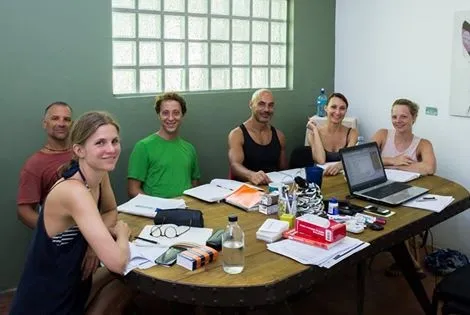
NSI’s group classes typically have two to four students, with a maximum of six. That leaves room to speak, ask questions, and receive feedback while still learning from other students’ attempts and ideas.
You may feel mentally tired after class. A relaxed lunch, a walk, or a short review can be more useful than forcing hours of extra study.
Choosing Between 10-Hour, 20-Hour, and Private Study
The best format depends on your goals, energy, schedule, and preferred kind of attention.
20-hour small-group immersion
NSI recommends the 20-hour group program for a fuller immersion experience. It includes two class sessions each weekday, giving beginners more time to hear key structures, practice speaking, revisit new material, and build momentum.
This may suit you if Spanish is a central purpose of the trip. Class occupies one part of the day, leaving the other for rest, activities, or everyday practice.
10-hour small-group immersion
The 10-hour group program includes one class session each weekday. It can be a good fit if you want a lighter study schedule or need more time for work, family, surf, yoga, or independent plans.
A lighter schedule does not make class less meaningful, but brief review and intentional Spanish use outside class become especially valuable.
Private Spanish instruction
Private lessons give you one-to-one attention and allow the teacher to focus closely on your pace, questions, and goals. This can help if you feel anxious speaking in a group, have a specific learning need, or prefer to spend more time on a difficult point before moving forward.
Some beginners thrive on a group’s shared energy; others prefer individual attention. Choose the environment that will help you participate most fully.
How to Practice Spanish Outside the Classroom in Nosara
Being in Costa Rica creates opportunities to use Spanish, but location alone does not create immersion. Playa Guiones is an international community, and English is common in many visitor-facing settings. Beginners make more progress when they choose small, manageable ways to practice.
Try setting one simple mission each day:
Greet people in Spanish before switching languages.
Order a drink or meal using a complete sentence.
Ask the price of something even if it is displayed.
Use numbers when paying.
Ask a short question at a shop.
Repeat a classroom phrase during a real interaction.
One authentic exchange is enough. If someone answers quickly, ask ¿Puede repetir, por favor? or Más despacio, por favor.
Note words you wanted but did not know and bring two or three to class. This creates a useful loop: learn, try, notice what is missing, and return with a reason to learn more.
Does Accommodation Affect Beginner Immersion?
Where you stay changes the kind of practice available outside class.
A homestay can add Spanish through meals, routines, and informal conversation. Short, imperfect exchanges and repeated greetings can become confidence builders.
The NSI residence provides more independence, private space, and shared facilities. You can also arrange your own hotel or rental and book classes only.
Choose according to how much interaction and recovery time you need. Confirm school-arranged accommodation and transport details with NSI before making travel plans, since rooms are subject to availability.
Seven Ways to Make Your Beginner Week More Effective
1. Arrive with a small, specific goal
“Become fluent” is too large for one week. “Introduce myself, order food, understand basic questions, and feel less afraid to speak” gives you something concrete to work toward.
2. Speak before you feel ready
Waiting for confidence usually means waiting too long. Confidence grows after you try, not before. Use the Spanish you have, even when it is limited.
3. Review briefly every day
Ten or fifteen focused minutes can help more than a long, exhausted study session. Revisit the phrases you actually used and the corrections that appeared more than once.
4. Protect your energy
Immersion is mentally demanding. Sleep, food, water, and unstructured time support learning. Avoid filling every free hour just because Nosara offers many activities.
5. Ask useful questions
Instead of saying only “I don’t understand,” identify the problem when you can: Is the word new? Was the sentence too fast? Are you unsure why a verb changed? Specific questions help your teacher respond clearly.
6. Notice progress in small moments
Your first spontaneous greeting, correctly understood price, or successful request matters. These small wins show that classroom Spanish is becoming usable.
7. Make a plan for after Costa Rica
One immersion week can create momentum, but continued contact helps protect it. Before leaving, decide how you will keep listening, speaking, or studying. Online lessons can provide continuity if you cannot return to Nosara soon.
Begin Spanish With a Clear Plan in Nosara
Your first Spanish immersion course should challenge you, but it should also give you a clear path into the language. In a small class, you have space to ask questions and try again. Outside the classroom, Nosara gives each new phrase a real setting and purpose.
Explore NSI’s Spanish immersion programs to compare 10-hour groups, 20-hour groups, and private instruction. If you are unsure which option fits your goals, travel plans, or learning style, use the Plan My Experience form or contact Nosara Spanish Institute. The team can help you identify an appropriate place to begin without expecting you to arrive already knowing Spanish.
Frequently Asked Questions
Do I need to study Spanish before an immersion course in Costa Rica?
No. Complete beginners can start without previous Spanish. Placement helps confirm your starting level so you can begin with appropriate material.
Will the teacher speak only Spanish to beginners?
NSI instructors teach in Spanish using explanations, examples, gestures, visuals, and context appropriate to the level. The purpose is to make Spanish understandable and usable, not to leave beginners guessing.
Is one week enough to learn Spanish?
One week is not enough to master a language, but it can build a useful foundation, improve your listening, and make speaking feel more possible. Your results will depend on your starting point, participation, course intensity, and continued practice.
Should a beginner choose group or private lessons?
Choose a small group if you enjoy learning with others and want varied conversation practice. Choose private instruction if you want individual pacing and concentrated attention. Both formats can work well for beginners.
Can I combine Spanish classes with a vacation in Nosara?
Yes. NSI’s classes occupy part of the day, leaving time for rest and independent plans. Choose the 10-hour or 20-hour format according to how central Spanish study is to your trip and how much daily structure you want.
