Spanish School in Costa Rica With Accommodation: Your Options
Choosing a Spanish program is only half of planning an immersion trip. Where you sleep, eat, study, and decompress can shape how often you speak Spanish and how easily you settle into a routine.
If you are searching for a Spanish school in Costa Rica with accommodation, you will usually encounter three broad options: a homestay with a local family, a student residence, or lodging you arrange yourself. None is automatically the best choice. The right fit depends on what you want from the experience, how much daily interaction you enjoy, and how you prefer to organize meals and transportation.
In Nosara, you may want Spanish to continue around the breakfast table, or you may value a private room and the freedom to cook on your own schedule. Thinking through those preferences before booking can make the experience more comfortable from the start.
Why Accommodation Matters During Spanish Immersion
Classes create focused time for grammar, vocabulary, listening, and guided conversation. Your accommodation shapes what happens around that structure.
Where you stay can influence:
How much Spanish you hear outside class
Whether meals are part of your daily routine or something you arrange yourself
How much privacy and independence you have
Your journey to and from the school
How easily you meet local people or other students
Whether you can maintain other routines alongside class
Accommodation does not create immersion by itself. A student can stay independently and still make a deliberate effort to use Spanish at cafés, shops, and local businesses. The best option supports the participation you are likely to sustain.
Option 1: Stay With a Costa Rican Host Family
A homestay places you in a local household, usually with your own bedroom and shared common areas. At Nosara Spanish Institute, the homestay experience includes breakfast and dinner, giving students regular opportunities to sit down with their hosts and use Spanish in ordinary conversation.
Who benefits most from a homestay?
A host family may be a strong fit if you want Spanish to remain part of your day after class. Even simple exchanges—asking about dinner, describing your day, or making plans—turn classroom language into something practical.
Homestays can also appeal to students who want more contact with daily Costa Rican life. You hear how people speak at home, notice local routines, and learn expressions that may not appear in a textbook.
What should you consider before choosing a homestay?
A homestay is a home, not a hotel. Household schedules, pets, meals, noise levels, and transportation vary. The most rewarding stays usually begin with realistic expectations and clear communication.
Before confirming, ask about:
Dietary needs or food allergies
Pets, children, stairs, or accessibility concerns
The expected journey to campus
Household routines and shared-space expectations
Arrival and departure arrangements
How much independence you prefer outside shared meals
You do not need to be fluent. You do need a willingness to participate and accept that communication may occasionally be imperfect.
Option 2: Choose a Student Residence
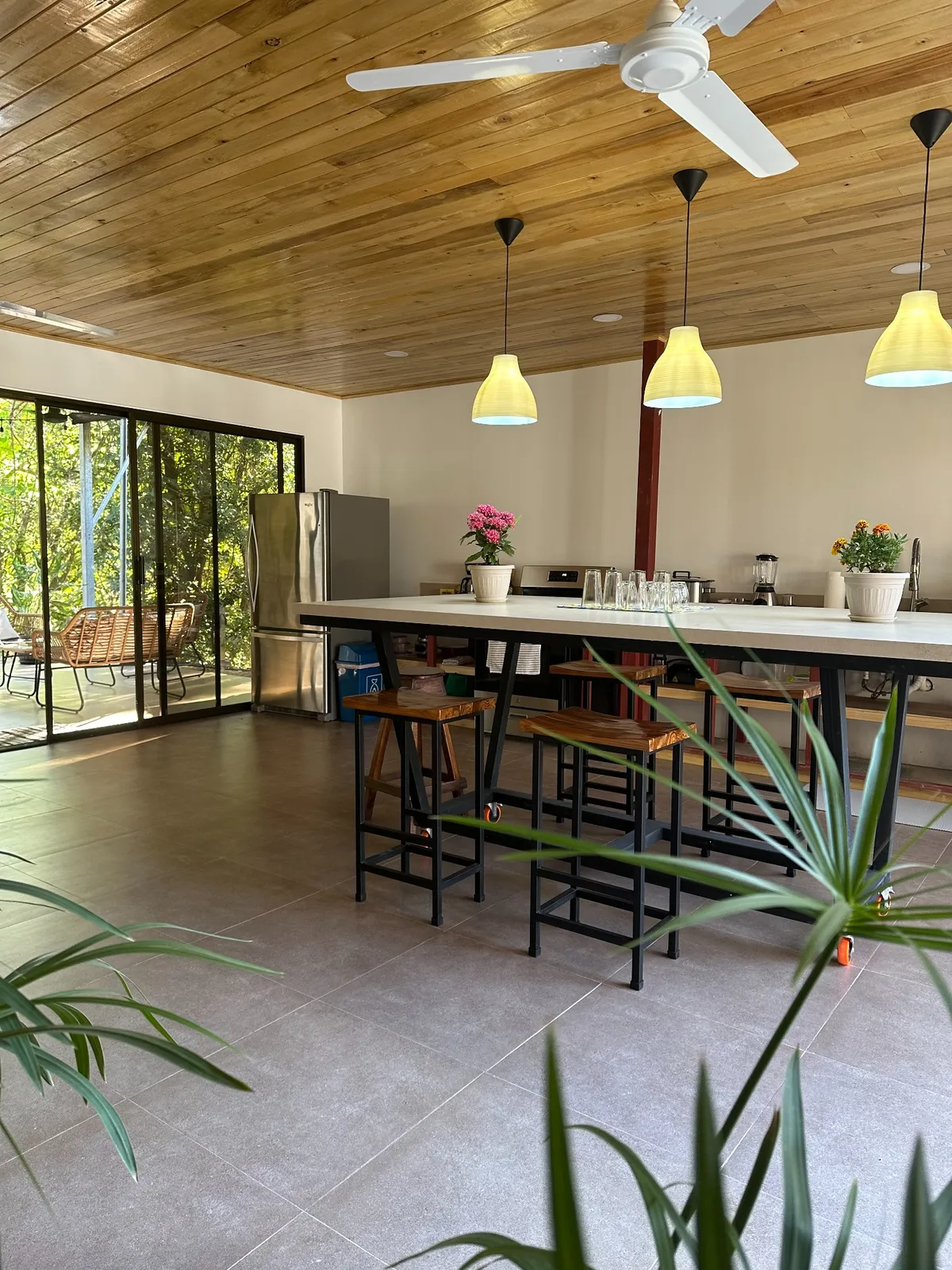
A student residence offers a different balance: more independence than a homestay, with the possibility of sharing common spaces with other learners. At Hacienda NSI, students have a private room with an ensuite bathroom and access to a shared kitchen and communal areas. Meals are not included, so residents can cook and organize their own routines.
Who benefits most from a student residence?
The residence may suit you if you like having a private base but do not want the isolation of a hotel room or vacation rental. It can work well for students who need quiet time, have a particular food routine, or want to balance Spanish study with remote work, surfing, yoga, or independent plans.
Living near other students can create low-pressure opportunities to compare notes or make plans after class. Set your own goals if you want those interactions to support your Spanish.
What should you consider before choosing a residence?
Independence comes with practical responsibilities. You will need to plan groceries, meals, and your daily transportation. Hacienda NSI is in La Esperanza, about one mile from the Playa Guiones campus, so the route to class should be part of your planning.
Ask yourself:
Do I want to prepare my own meals?
Will I be comfortable organizing transportation or a regular route to class?
Do I need reliable space for work or private study?
Would I enjoy sharing common areas with other students?
Am I comfortable creating my own opportunities to speak Spanish outside class?
Option 3: Arrange Your Own Hotel, Rental, or Other Lodging
You do not have to book accommodation through your Spanish school. Independent lodging can be the right choice if you are traveling with a partner who is not studying, have specific amenity needs, already know Nosara, or want to use hotel points or a rental you have selected yourself.
Who benefits most from independent lodging?
This option gives you the widest choice over location, privacy, style, and budget. It can be useful for families, couples with different schedules, repeat visitors, or travelers extending a larger trip.
The tradeoff is that your school and accommodation are planned separately. You are responsible for confirming the route to campus, meal arrangements, cancellation terms, and whether the property fits your daily routine.
Questions to ask before booking independently
Nosara addresses and travel times do not always behave like a city grid. A listing that appears close on a map may still involve a longer route than expected or transportation you need to arrange.
Before committing, check:
The actual route to the NSI campus in Playa Guiones
How you will travel during rain or after dark
Whether the property has the workspace, kitchen, or accessibility features you need
Whether you can change the reservation if your plans shift
How easily you can build Spanish into your daily life
If location is important, share the property or neighborhood with NSI before booking and ask about the practical commute. The school can provide local context, but the lodging provider should confirm the property’s amenities and policies.
Homestay vs. Residence vs. Independent Lodging
Here is a simple way to compare the three options:
Choose a homestay if you want:
Regular contact with a local household
Breakfast and dinner included in the routine
More natural opportunities to hear and use Spanish at home
Cultural exchange alongside your classes
Choose the student residence if you want:
A private room and bathroom
A shared kitchen and communal spaces
More control over meals and your daily schedule
A student-oriented home base with greater independence
Arrange your own lodging if you want:
Maximum choice over location, amenities, and style
Space for a partner, family, or a particular work setup
A hotel or rental that is already part of your travel plan
Full control over your accommodation booking
Your Spanish level does not have to determine the answer. Consider your energy, habits, and learning style—not only the option that sounds most immersive on paper.
How to Match Your Accommodation to Your Spanish Goals
Start with the outcome you want from the trip.
If your priority is speaking confidence, choose an environment with repeated, manageable conversations. If you value a steady routine, a residence may give you more privacy and control. If you are combining school with a family vacation or extended stay, independent lodging may keep the trip simpler.
Then consider the practical side:
Choose your Spanish program and approximate length of study.
Decide how much interaction, privacy, and meal support you want.
Discuss mobility, dietary needs, work commitments, and fixed schedules before booking.
Confirm accommodation availability and the daily route to campus.
Review the complete package or separate lodging terms before paying.
This order helps you avoid choosing a place that does not work with your class schedule or need for rest.
Plan a Spanish Program and Stay That Fit Together
Nosara Spanish Institute offers small-group and private Spanish programs in Playa Guiones, with the option to request a local homestay or a room at Hacienda NSI. You can also book classes only and arrange your own lodging.
Tell us your preferred dates, Spanish level, accommodation needs, and what matters most in your daily routine. We can explain the available options and help you compare the complete experience before you make travel plans. Accommodation is subject to availability, so confirm your room and program before booking separate transportation or nonrefundable lodging.
Frequently Asked Questions
Does Nosara Spanish Institute offer accommodation?
Yes. Students can request a homestay with a local family or a private room at Hacienda NSI, the student residence. You can also choose classes only and arrange your own hotel or rental. All school-arranged rooms are subject to availability.
Is a homestay better for learning Spanish?
A homestay can provide more opportunities to hear and use Spanish during meals and everyday conversations. It works best for students who are willing to participate in household life. It is not the only way to create immersion; students staying elsewhere can also build regular Spanish practice into their day.
What is included in the NSI student residence?
Hacienda NSI provides a private room and ensuite bathroom, access to a shared kitchen and communal areas, Wi-Fi, air conditioning, hot water, linens, and weekly room cleaning. Meals are not included. Confirm current amenities and room availability with NSI before booking.
Can I book Spanish classes without accommodation?
Yes. You can select a classes-only program and make your own lodging arrangements. Check the actual route to the Playa Guiones campus before reserving a hotel or rental.
How far is NSI accommodation from the school?
Locations vary. Homestays are in Nosara and nearby communities, while Hacienda NSI is in La Esperanza, about one mile from the campus. Confirm the specific location and daily transportation plan with NSI before arrival.
