Give Your Kids a Summer They Will Actually Remember
A family Spanish program in Costa Rica gives your kids more than another summer that blends together. It gives them real words to say, real people to say them to, and real memories tied to sandy feet and salty hair. Instead of dropping your kids at a camp and hearing quick stories at pickup, you get to learn and play right alongside them.
Picture a simple morning in Nosara. You wake up to the sound of waves in the distance, walk out to the patio, and slice fresh pineapple. On the way to class, your kids say "Buenos días" to the neighbor walking by. No pressure, no grades, just daily chances to try out Spanish in a place where it feels natural and fun.
A family Spanish program becomes the heart of your trip, not just another side activity. You learn together, laugh over new words together, and explore Costa Rican culture as a team instead of watching from the sidelines. Our school is close to the beach, so you never have to choose between language learning and lazy beach time. You get both, all in one easy walkable area, especially nice during the June to August school break.
What a Typical Week in a Family Spanish Program Looks Like
A typical week has a clear rhythm, but it never feels stiff. It feels like vacation with a purpose.
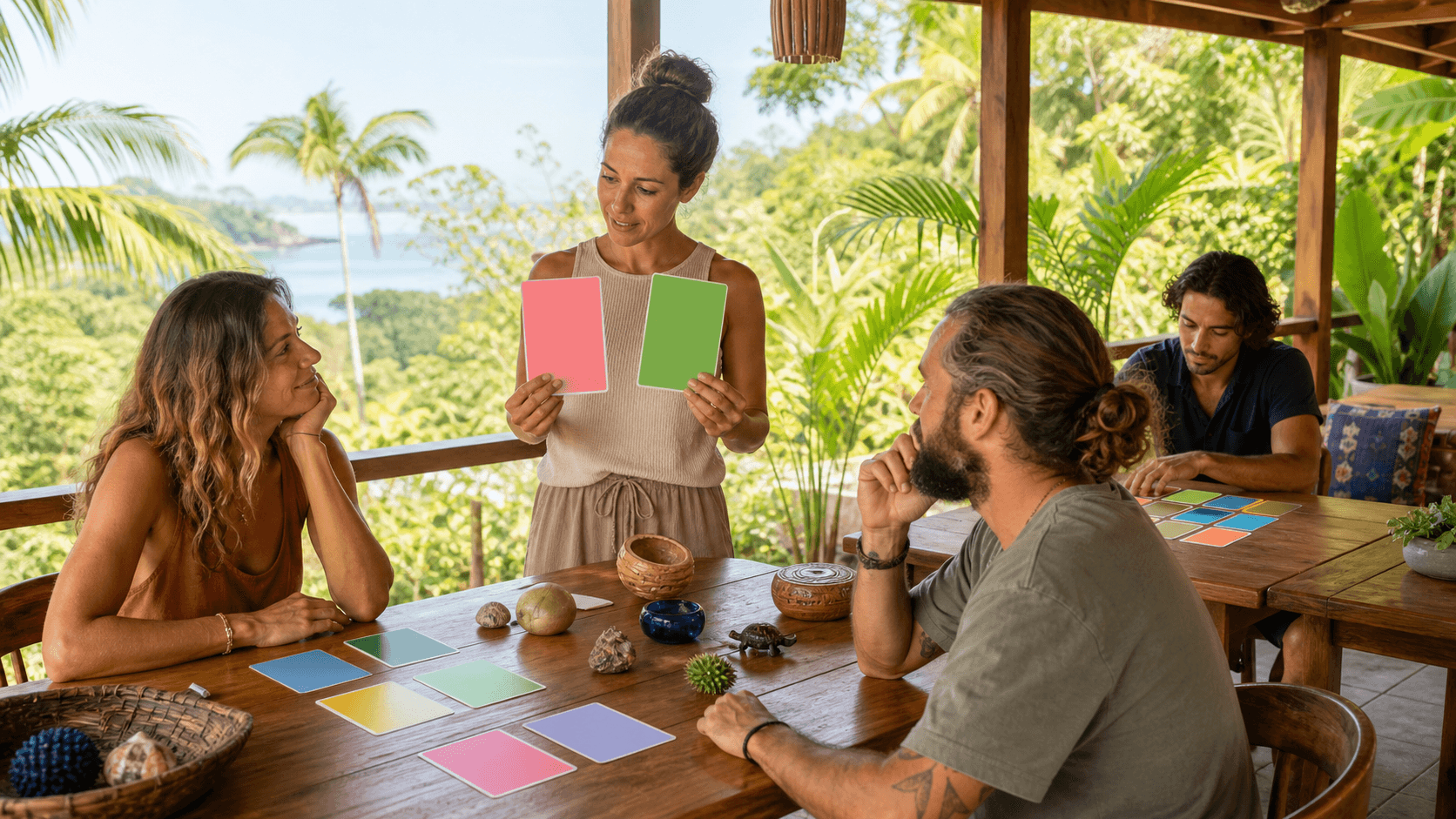
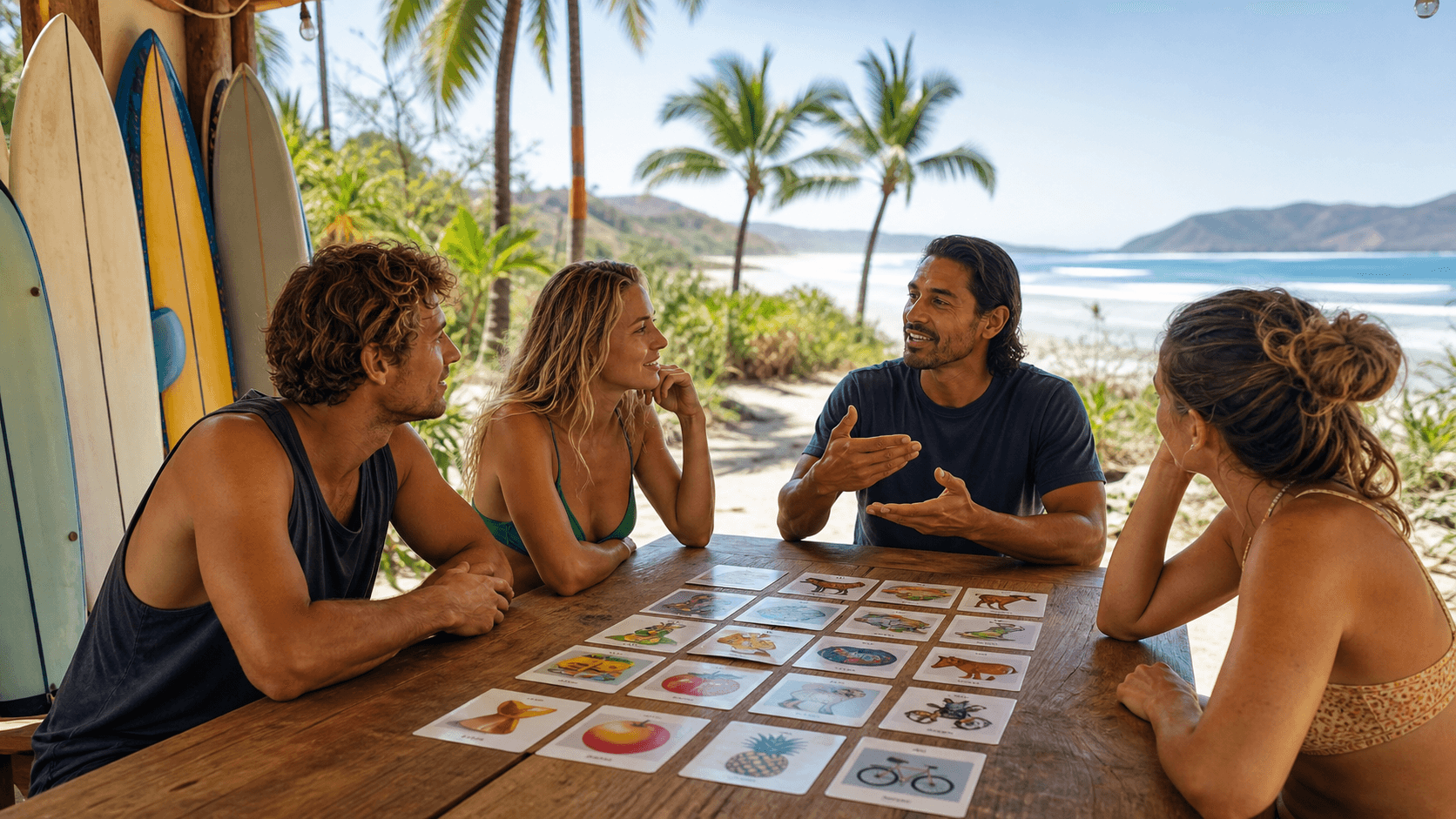
Most days start with morning classes. Parents and kids head to Spanish lessons that are designed for their age and level. Younger kids might be playing games and drawing while older kids work on simple conversations. Adults practice real-world phrases they can use later on that same day.
A sample day might look like this:
- Morning: Spanish classes for different ages
- Late morning: Smoothie or snack break, quick chat with teachers
- Afternoon: Surf lessons or beach time
- Late afternoon: Family walk, small errands in town, relaxed homework or review
- Evening: Dinner, maybe a sunset at the beach, early night from happy tiredness
Afternoons are where classroom learning turns into real life. You might:
- Take a surf lesson where your instructor chats with you in Spanish
- Walk the beach and learn the Spanish words your kids spot around them
- Join a casual community event, like a local soccer game or a small market
There is enough structure so you feel grounded, but also room to breathe. Some days you may choose an organized activity. Other days you may sit by the pool, read, and let the kids play, then head out together to try ordering snacks in Spanish. You are in control of how full or slow your days feel.
How Learning Works for Different Ages and Levels
Families come with all kinds of mixes: one parent who speaks some Spanish, one who is brand new, a teen who is shy, a younger child who has no fear at all. We work with that mix, not against it.
Adults, teens, and younger kids usually have different class formats. Adults might sit in a small group focused on conversation and everyday phrases. Teens may work on role plays, short dialogs, and fun projects like planning a pretend trip in Spanish. Younger kids often learn through:
- Songs and simple stories
- Crafts with labeled colors and shapes
- Games that get them moving and speaking
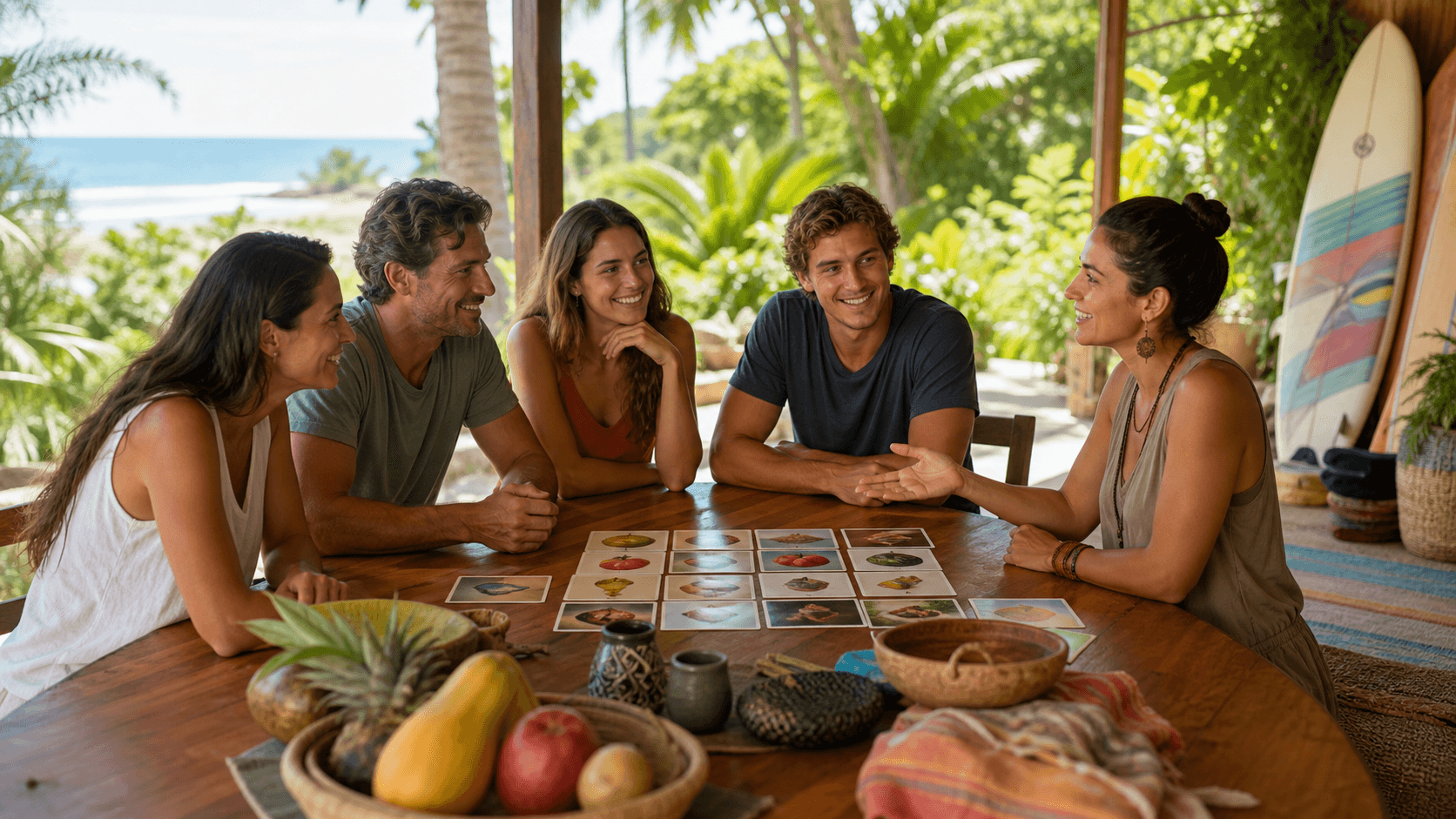
Even though classes are separate, we often connect them through shared themes. If the adults are learning how to order food, kids might be pretending to run a restaurant. If teens are talking about nature and animals, little ones might be coloring ocean creatures and learning their names. That way, at lunch or dinner, everyone can talk about what they learned. Spanish becomes a family topic, not just a class subject.
Small group sizes mean kids and adults get noticed. Teachers can slow down for a nervous beginner or add extra challenge for someone who is picking things up quickly. Private or semi-private sessions are also an option for families who want extra focus on their own goals, whether that is travel phrases, school prep, or more advanced conversation.
Beyond the Classroom: Culture, Community, and Homestays
Language sticks better when it lives in real moments. Outside the classroom, families get to see daily life in Costa Rica up close.
You might walk together to a local soda, a simple Costa Rican cafe, and order a plate of gallo pinto. Kids learn how to ask for a juice flavor, parents practice polite phrases, and everyone hears local expressions in a friendly setting. You start to pick up little things, like how people really say hello or thank you here.
When community events line up with your visit, you can join in. That might mean a local fair, a beach cleanup, or a small cultural activity. It is relaxed and real. You are not watching a show, you are just part of daily life for a bit.
Homestays give an even deeper experience. Staying with a local host family means:
- Shared meals where Spanish and smiles do most of the talking
- Kids hearing natural speech all day, even in the background
- A warm, kid-friendly home close to the beach and school
For some families, a homestay is the highlight, and it gives kids a second set of caring adults they remember long after they go home.
Other families feel better in a private villa, rental, or boutique hotel. That is completely fine. There are many comfortable spots close to the school and the beach. We help families think through what fits their comfort level, the ages of their kids, and how much immersion they want outside class.
Why a Family Spanish Program in Costa Rica Beats a Regular Vacation
A regular resort trip can be fun, but it often keeps you in a bubble. Most conversations stay in English, and you might leave without really knowing the place where you spent the week.
With a family Spanish program in Costa Rica, your vacation looks different. You are still by the pool, still at the beach, still sipping something cold, but you are also:
- Saying hello to your barista in Spanish
- Helping your child buy a snack on their own
- Talking through a surf lesson without switching back to English every time
For kids, the long-term benefits go far beyond a tan. They start the new school year with:
- Extra confidence in Spanish class
- Real memories tied to words and phrases
- A sense that other countries are not scary or strange, just different and interesting
Parents get just as much from it. You get to model what it looks like to keep learning, even as an adult. You brush up on your own Spanish, enjoy slower days close to nature, and share a family experience that feels more meaningful than a quick trip that is over before it really begins.
Planning Your Nosara Family Immersion Getaway
If you like the idea of learning together, the next step is simple planning. Many families choose early summer, around June, because school is out, the days feel long, and the town has good energy without heavy holiday crowds.
To plan your stay, you will want to think through a few things:
- Dates that line up with your school break and work schedules
- Class formats, like small groups for kids and adults or some private time for your family
- Lodging style, from homestays to rentals or boutique hotels close to the beach and school
- Extra options, like pairing Spanish with surf or yoga, depending on what your family enjoys
Nosara Spanish Institute is set up for this kind of trip. We are used to questions about kids of different ages, parents with mixed levels, and families who want both learning and relaxed vacation time. When you are ready, you can look at our family offerings, ask about programs that fit your children, and reserve the week that feels right for your next summer escape.
Give Your Family a Shared Language Adventure in Costa Rica
If you are ready to turn your next vacation into a meaningful cultural experience, explore our family Spanish program in Costa Rica and start planning together. At Nosara Spanish Institute, we customize classes and activities so every member of your family learns at a comfortable pace while enjoying time at the beach. Tell us about your goals, schedule, and kids' ages, and we will recommend the best session for you. Have questions or need dates and pricing details? Simply contact us so we can help you map out your family's Spanish immersion experience.