Balance Your Nosara Adventure Without Burning Out
Spanish immersion in Costa Rica can sound like the perfect dream: early surf at Playa Guiones, focused Spanish class, a long lunch, then slow yoga at sunset. Warm water, palm trees, and fresh food all around. It is a chance to grow your language skills while enjoying the things you love most.
But when we cram surfing, yoga, and full Spanish immersion into a short stay, the body and mind can tap out fast. Soreness, sun fatigue, and brain overload can sneak up and take the joy out of the week. Here we want to share how to build a Nosara schedule that feels exciting and still kind to your energy, so you learn more Spanish, enjoy every wave and class, and head home refreshed instead of worn out.
Know Your Energy Before You Book Anything
Before picking dates or programs, it helps to be honest about how you function. Some of us love early mornings and feel sharp at sunrise. Others need a slow start, coffee, and quiet before doing anything big.
Ask yourself:
- Do you learn best early, mid-day, or later?
- How much sleep do you really need to feel good?
- How does your body respond to heat and strong sun?
- On past trips, when did you feel tired or grumpy?
Once you know your own patterns, you can match program intensity to your style. A full immersion schedule might include:
- Daily Spanish classes
- Homestay with a local family
- Regular surf or yoga sessions
- Lots of Spanish conversation all day
This can be amazing for fast learning, but it is also very full. A lighter mix might be:
- Spanish classes a few days per week
- Surf or yoga some afternoons
- Free time for rest and quiet practice
Less can actually mean deeper learning, because your brain has space to absorb new words and patterns instead of just pushing through.
July is a popular time for Spanish immersion in Costa Rica. Many families and students are on school break, surf is fun, and the days feel full. The sun is strong and there is plenty going on, so pacing and downtime matter even more. When you plan, think about both your energy and the time of year, and give yourself room to breathe.
Designing a Daily Rhythm That Actually Feels Good
A good day in Nosara should leave you pleasantly tired, not totally drained. A balanced sample day might look like this:
- Morning: Spanish classes while your mind is fresh
- Mid-day: lunch, rest in the shade, light homework
- Late afternoon: surf lesson or free surf when winds calm a bit
- Evening: gentle yoga or relaxed Spanish conversation
This kind of flow gives your brain strong focus time, then space to reset before you ask it to pay attention again.
It also helps to protect your non-negotiables. Before you travel, decide what you will guard each day, for example:
- A set bedtime or minimum hours of sleep
- One tech-free hour
- A big water bottle goal
- Quiet alone time, even just 20 to 30 minutes
When you know your non-negotiables, it is easier to say no to "just one more" surf session or late-night outing that would push you into burnout.
Think in terms of light and heavy days, for both body and brain. You might plan:
- One heavier surf day with smaller Spanish load
- One quieter day with more class time and gentle yoga
- A middle day with both, but shorter sessions
This simple pattern helps your muscles recover and gives your mind breaks from constant new input.
Making the Most of Spanish Immersion in Costa Rica
Spanish immersion is not only what happens in the classroom. Real growth comes from using Spanish in daily life. Between classes, you can:
- Order food or coffee in Spanish
- Chat with surf instructors about the waves
- Ask locals about tides or beach access
- Practice greetings and small talk with neighbors
Surfing and yoga give you natural topics to talk about. You can practice phrases for:
- Describing waves and conditions
- Asking for board sizes or leash length
- Talking about body parts, stretches, and muscles
- Sharing how you feel after class
These real moments help words stick, because they are tied to something you care about.
It also helps to choose the immersion style that fits your social battery. A homestay with a local family can speed up your Spanish because you hear and use the language all day. This can feel intense, since you are "on" more of the time. Private or shared apartments give you more space to switch off, journal, read, or review vocabulary quietly. Both paths are valid; it just depends on how much interaction feels right to you.
Surf, Yoga, and Recovery: Finding Your Sweet Spot
Surf looks easy from the beach, but it asks a lot from your body and mind. For beginners, a session often means:
- Paddling again and again
- Popping up to your feet
- Keeping balance in moving water
- Dealing with sun and salt
That is a lot on top of Spanish classes and social time. We often suggest starting with shorter or less frequent surf sessions in your first days while your body adjusts.
Yoga can support you if you choose the right style for the day. Stronger classes like vinyasa or power can be fun on lighter surf days when your shoulders are less tired. After an intense morning in the water, many people feel better with slower styles like yin or restorative to help the body reset.
The most important skill is listening to your own signals. If you notice:
- Heavy legs or sore shoulders
- Trouble focusing in class
- Feeling short-tempered or spaced out.
It might be a sign to change plans. Trade a surf session for a calm beach walk, or skip a night out and review Spanish flashcards in a hammock. Flexibility keeps your energy steady so you enjoy the full week, not just the first few days.
Smart Packing and Planning for a July Immersion
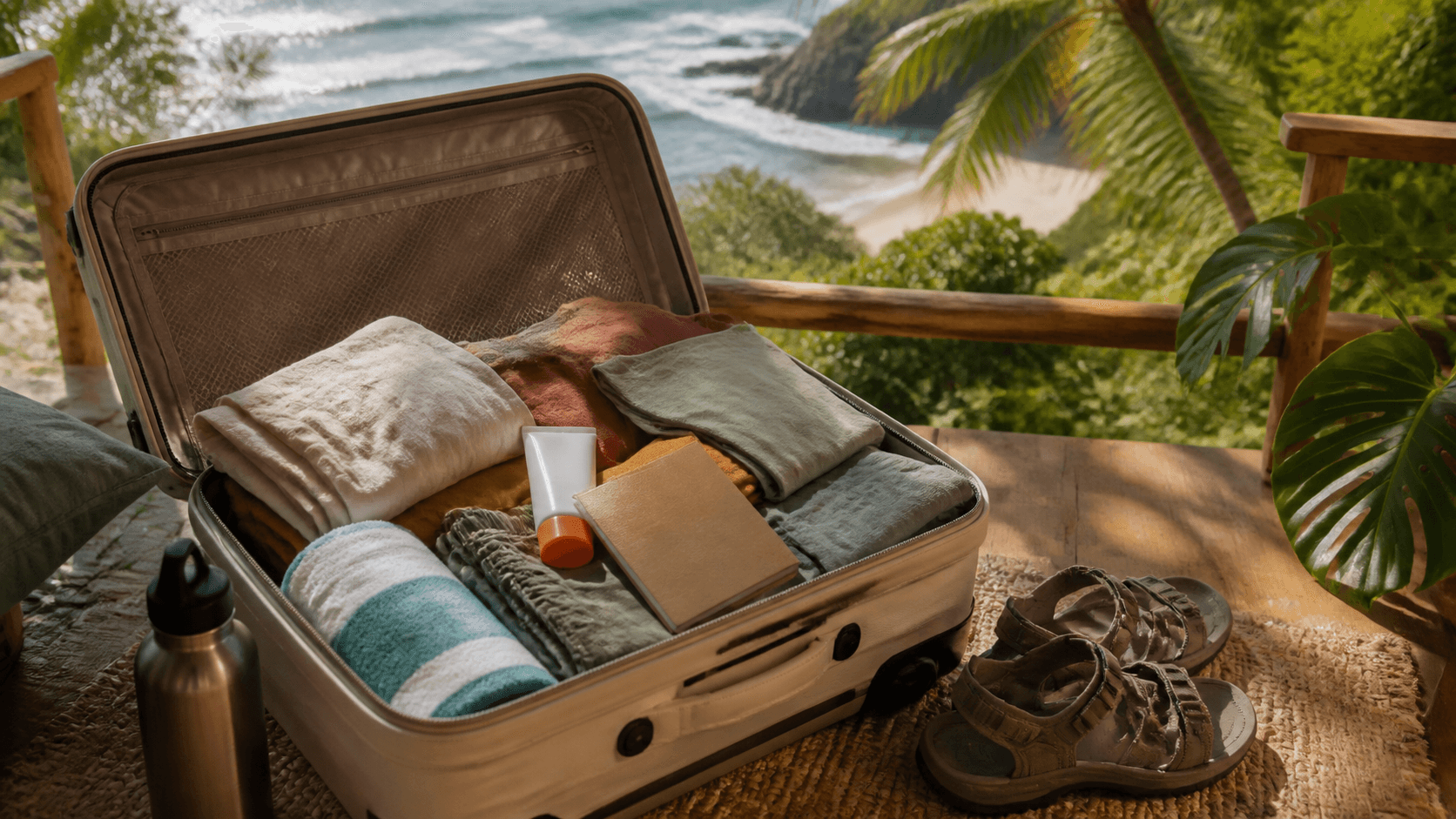
Good packing and planning can make Spanish immersion in Costa Rica feel smoother from day one. For July in Nosara, we suggest bringing:
- Strong sun protection, including a hat and mineral sunscreen
- Rash guards for surfing and long hours in the water
- Quick-dry clothing and light long sleeves for sun cover
- A reusable water bottle to keep with you
- Comfortable clothes for Spanish classes so you can focus
You can also warm up your brain before you land. A simple plan for two to four weeks before you travel might include:
- Basic greetings and polite phrases
- Numbers, days of the week, and time
- Surf and yoga words you are likely to hear
- Short audio or video listening in Spanish
This way, immersion feels exciting instead of like a shock to the system on day one.
Finally, give yourself buffer time around travel days. It helps to avoid big surf sessions or heavy class schedules right when you arrive or just before you fly out. Those first 48 hours are perfect for:
- Settling into your room
- Getting a feel for the walk to class and the beach
- Adjusting to the local rhythm and daylight
At Nosara Spanish Institute, we see that when students protect their energy, they learn more, surf and stretch with joy, and leave with both stronger Spanish and a sense of deep rest. A week that blends study, surf, yoga, and true downtime is not only possible, it is often the most rewarding way to experience this coastal town.
Start Your Costa Rican Spanish Immersion Journey Today
If you are ready to truly live the language, our team at Nosara Spanish Institute is here to guide you through an authentic Spanish immersion in Costa Rica. We design our programs to fit your goals so you can gain real-world confidence in speaking, listening, and connecting with locals. Reach out to contact us and we will help you choose the immersion plan and schedule that fits your timeline.