Design Your Ideal Costa Rica Immersion Week
An intensive Spanish course in Costa Rica should not feel one-size-fits-all. Your week needs to match your level, your travel style, and how your brain likes to learn. When you get that mix right, progress feels natural, not forced, and you finish each day tired in a good way, not overwhelmed.
Nosara is a great place to do this, especially in late August. There are fewer crowds, the town feels calmer, and the green hills around the beach are extra lush. Surf is friendlier for learners, classrooms are quieter, and teachers have even more space to give you personal attention. In this guide, we will walk through how to shape an intensive week by proficiency level, from placement to lesson mix, electives, and clear goals, so your time in Costa Rica feels focused and fun.
Get Placed Correctly so Your Classes Fit You
Good placement is the first step. Before you even land in Costa Rica, a professional school will usually start with:
- A short online quiz to get a rough idea of grammar and vocabulary
- A brief oral interview to hear your speaking and listening in real time
- A needs analysis where you share why you are studying, like travel, work, or school
All of this helps your teachers see not just what you know, but how you use Spanish. Then the week can be shaped for your level.
For beginners, placement leads to classes built around:
- Basic grammar like present tense and simple questions
- Survival conversation for town, travel, and homestays
- Everyday topics like food, directions, and personal details
For intermediate students, placement focuses on:
- Filling gaps in tenses you already learned
- Moving from controlled practice to more natural conversation
- Nuance, speed, and listening to natural speech
- Specialized vocabulary for work, study, or interests
- Style choices, like formal vs casual Spanish
When placement is accurate, beginners do not feel lost, intermediates do not sit through content they saw years ago, and advanced students avoid that "plateau" feeling where class is too easy and progress feels stuck.
Build the Right Daily Lesson Mix by Level
A typical day in an intensive Spanish course in Costa Rica often follows a simple flow:
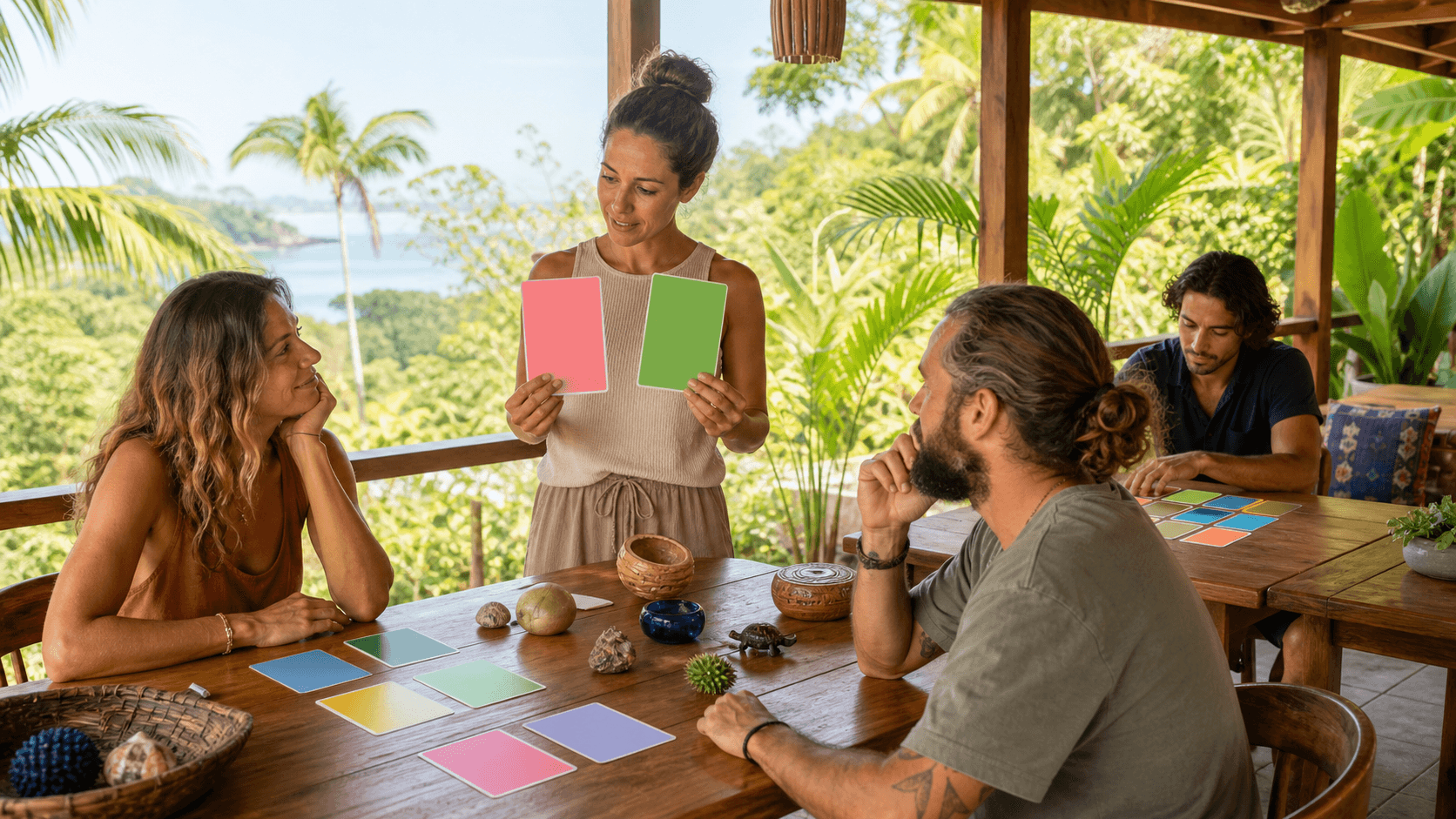
- Morning: Grammar and structure while your brain is fresh
- Late morning: Conversation and listening practice
- Afternoon: Cultural or activity-based Spanish in real settings
Within that basic shape, the mix changes a lot by level.
For beginners, we usually recommend:
- More guided grammar blocks so you see clear patterns
- High-frequency verbs you will use all day, like "to go," "to want," "to have"
- Pronunciation drills so Spanish sounds start to feel natural
- Structured conversation patterns, like simple dialogs and role-plays
The goal is confidence. You should leave each class thinking, "I can say a little more than yesterday," not "I memorized rules I cannot use."
As you move into intermediate and advanced, the ratio shifts toward real communication:
- Longer conversation sessions, including debates and storytelling
- Listening to authentic audio like short clips, songs, or local voices
- Role-plays of real-life tasks, from travel problems to workplace chats
- A targeted "grammar lab" to fix your recurring errors instead of covering every rule
At these levels, grammar is still there, but in service of fluency. You get time to talk, be corrected, try again, and slowly sound more natural.
Choose Smart Electives: Surf, Yoga, and Culture by Level
Electives can turn your intensive course into something that fits your travel style. The key is choosing activities that support your Spanish instead of stealing all your energy.
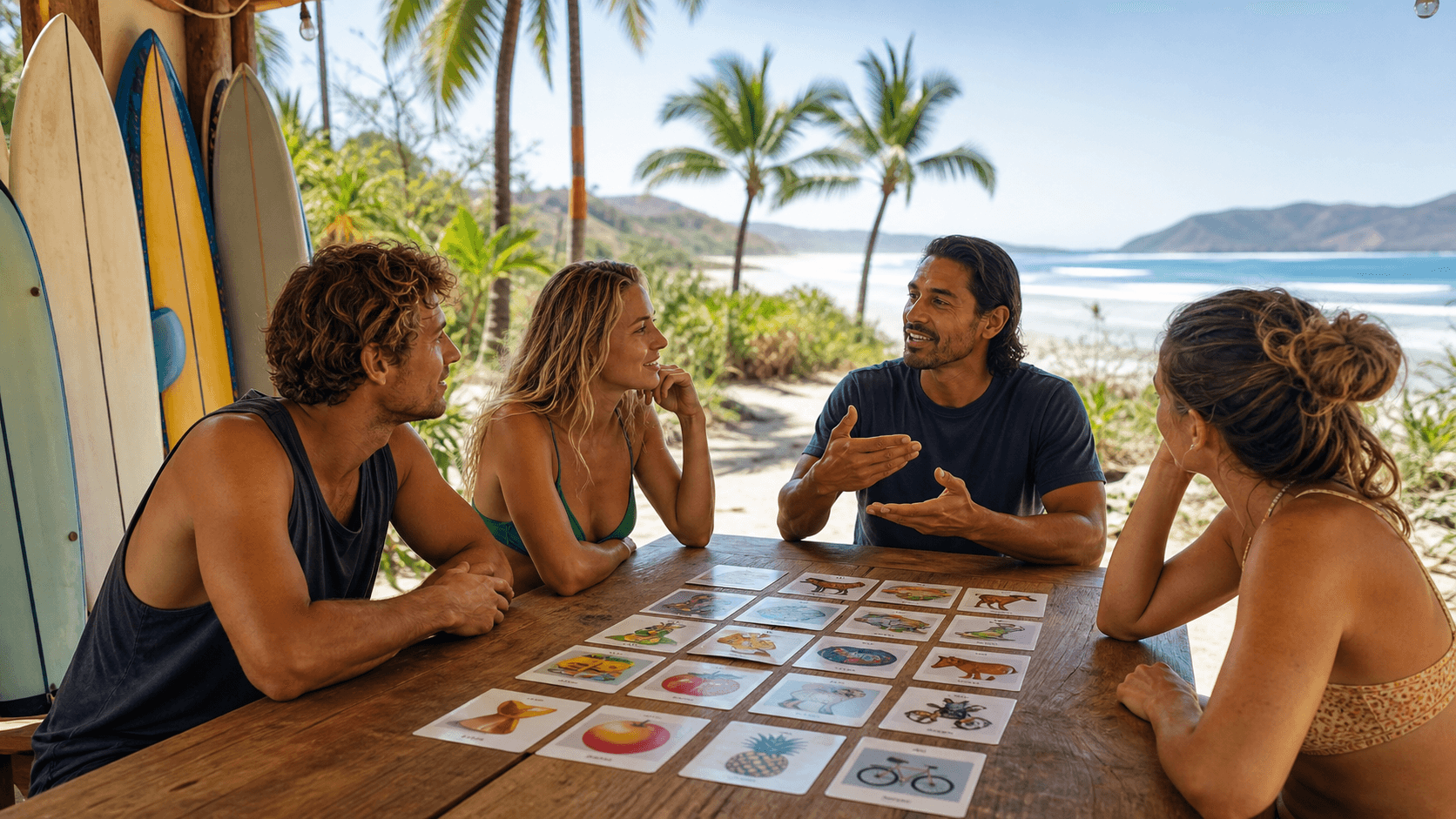
For beginners, highly visual, hands-on options work best:
- Surf lessons where instructors repeat key words and gestures help you follow
- Simple cooking classes where you learn food words and kitchen verbs
- Basic cultural workshops like dance or art with short, repeated phrases
You may not talk a lot at first, but your brain links Spanish to movement, taste, and fun.
For intermediate learners, you can handle more interaction:
- Guided market visits where you ask prices, compare items, and chat
- Homestays where daily routines force you to use past and future tenses
- Light volunteer projects with clear tasks and simple but real conversations
For advanced students, electives can be quite challenging:
- Group talks about local news or current events
- Sustainability or nature tours with detailed explanations and questions
- Practice around professional topics like wellness, tourism, or remote work
Nosara's surf and yoga scene fits into this at every level. You can plan:
- Surf and Spanish weeks that combine morning class with afternoon waves
- Yoga and Spanish for wellness-focused travelers
- Cultural sessions that introduce Costa Rican slang and daily expressions
Late August brings some nice seasonal perks for electives, like warm water, steady swell for different surf breaks, bright green nature for eco-tours, and a relaxed town rhythm that makes it easier to start conversations in Spanish with locals.
Set Measurable Goals for Fast Progress
"Get better at Spanish" is too vague, especially for a one- or two-week stay. Specific, simple goals help you and your teachers aim your energy.
Some ideas that work for any level:
- Number of new words you want to record and review each day
- Specific grammar points you want to feel comfortable using
- Minutes per day you will speak only Spanish
- Real-life tasks you want to complete fully in Spanish
How this looks by level:
- Beginners: order food, ask for directions, introduce yourself, describe your day in the present tense
- Intermediates: tell a story in the past, talk about future plans, handle basic problems like changing a booking
- Advanced: use natural connectors like "however" and "on the other hand," use idioms, handle work calls or short presentations
A school like Nosara Spanish Institute can use your placement results and early class feedback to build a simple written roadmap for your stay. With a quick check-in midweek and an informal "exit interview" at the end, you see what changed, what still feels hard, and how to keep growing once you head home.
Plan Your Customized Intensive Week in Nosara
To plan a smart intensive Spanish course in Costa Rica, especially around late August, start by asking yourself a few honest questions. How many hours of focused class can you really handle each day? How much of your time do you want free for surf, yoga, or quiet rest? What matters more this trip, speed of progress or a gentle pace?
From there, you can shape a simple plan: decide on your study hours, take a pre-course level test, write down three personal goals, choose one or two electives, and share all of this with your school before you arrive. That way your week in Nosara starts on day one with classes at your level, activities that match your interests, and clear goals you can actually measure. You leave not just with memories of the beach, but with stronger Spanish and a clear next step for what to do with it once you are back home.
Accelerate Your Spanish Fluency In Paradise
If you are ready to move beyond apps and textbooks, our intensive Spanish course in Costa Rica gives you the structure, practice, and real-world immersion you need to progress fast. At Nosara Spanish Institute, we design each program so you can actively use Spanish every day, not just study it. Tell us about your goals and schedule through our contact page, and we will help you choose the right start date and course level for your stay.