When a Short Spanish Immersion in Costa Rica Is Not Enough
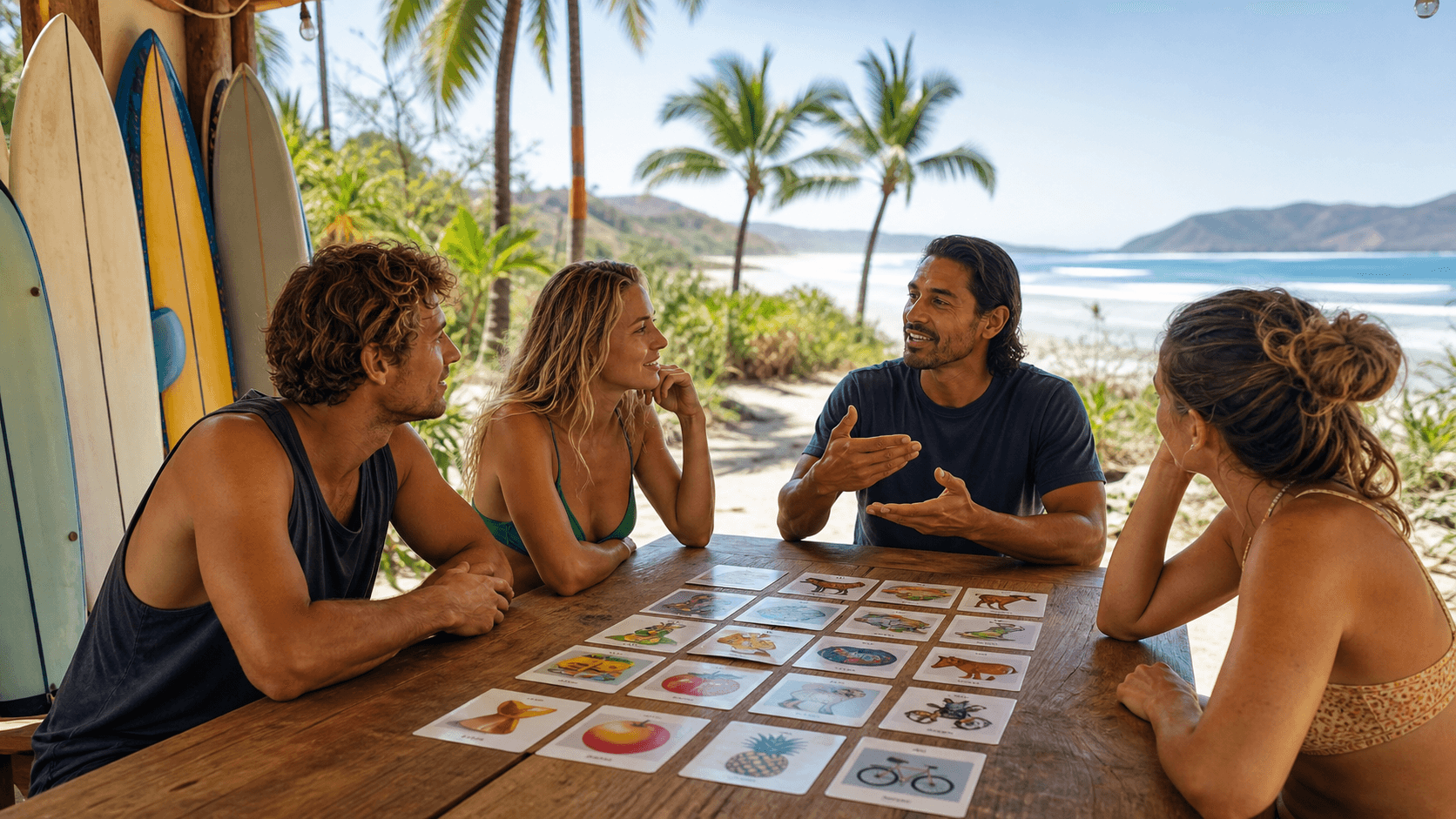
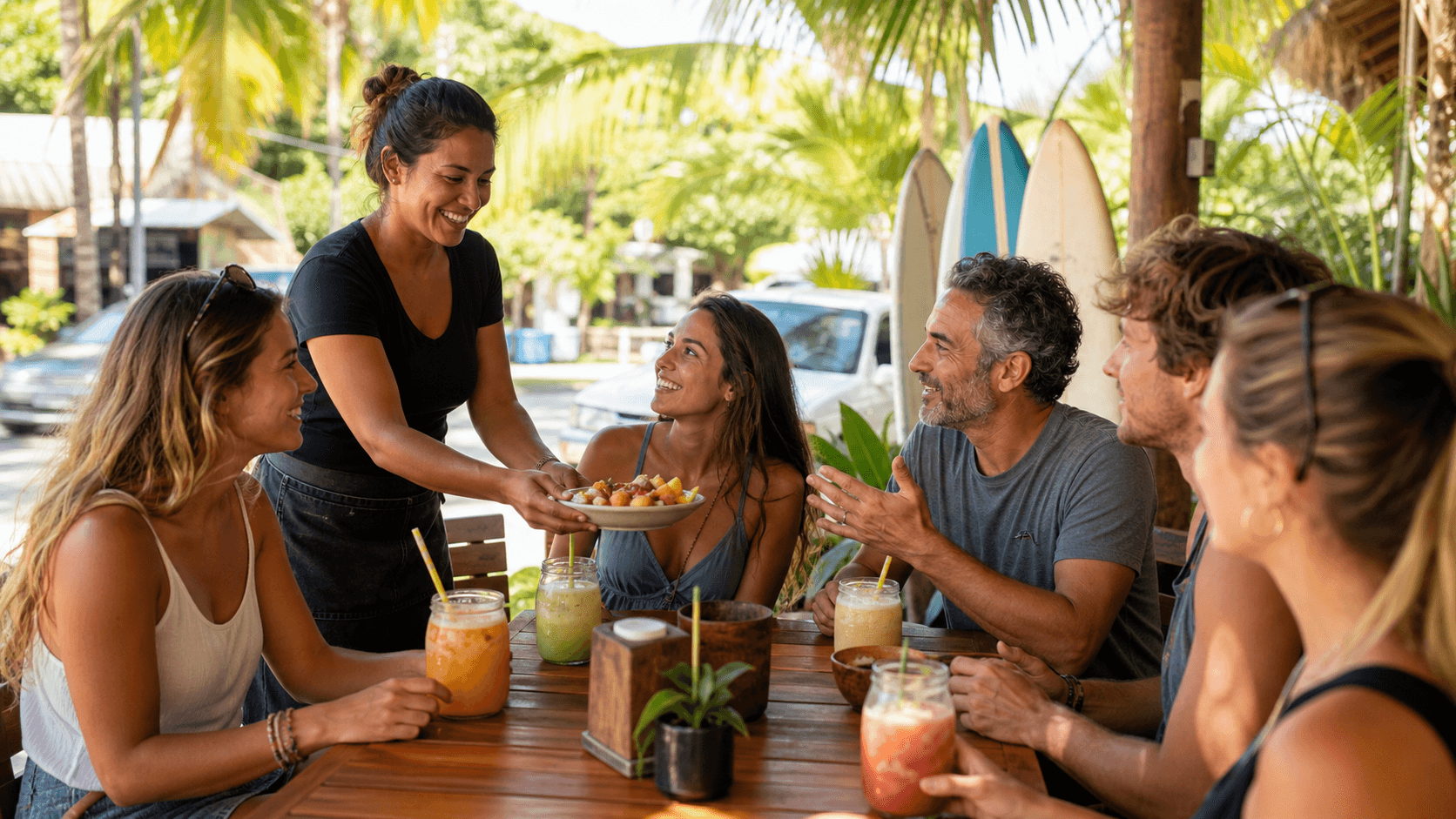
A short-term Spanish course in Costa Rica can feel magical. You land, drop your bags, walk to class in flip-flops, order a café in Spanish, and feel your confidence grow every day. By the end of the week, you are answering your teacher without thinking and chatting with locals at the smoothie bar.
Then you fly home. Within days, the energy fades. You reach for Spanish words and they do not come. You go back to English at work, with family, even while scrolling on your phone. It feels like all that progress stayed on the beach.
We see this pattern all the time. In this post, we want to explain why short immersions often hit a ceiling, how you can stretch the impact of even one week, and how to know when it is time to stay longer or come back for a deeper experience in Nosara.
Why Short Spanish Immersions Hit a Ceiling
The first week or two of immersion feels fast and exciting for a reason. Your brain is soaking in:
- Survival phrases for food, transport, and greetings
- Common verbs like querer, ir, tener, hacer
- Classroom routines, jokes, and local expressions
You can memorize these chunks quickly. You hear them many times a day, so they stick. This is why people feel such a big jump at the start of a short-term Spanish course in Costa Rica.
Then you hit what we call the processing wall. To move forward, your brain needs to:
- Put verbs into many tenses, not just present
- Connect ideas, tell stories, and explain reasons
- Understand different accents and speeds
That deeper layer needs more time and repetition than a single week or two can usually give.
There is also the false fluency effect. In a friendly surf town, people speak slowly, repeat things, and help you find words. Your teacher understands your accent. Classmates share your level. You feel fluent, at least inside that bubble.
The reality shows up when you:
- Try to talk on the phone and cannot see the other person's face
- Need to explain a problem at a clinic or bank
- Want to talk about feelings, opinions, or work projects
A short stay can absolutely:
- Grow your vocabulary
- Make your ears more comfortable with Spanish sounds
- Help you feel at home in Costa Rican culture
But skills like storytelling, debating, or using Spanish in a professional setting usually need a longer runway or repeated immersion cycles.
Signs Your Spanish Needs More Than a Vacation
So how do you know if that one short course was just a good memory, or the start of something bigger? There are some clear signs your Spanish needs more than one vacation.
You might notice that you cannot keep up off the tourist track. It is one thing to order lunch on the beach. It is another to sit in a local office, read forms, or talk with staff who are in a hurry. When people speak naturally, without slowing down for you, your brain can feel two steps behind.
You might also freeze in real conversations. Many learners:
- Understand 60 to 70 percent, but still answer in English
- Rely on translation apps for every verb
- Stick to one-on-one chats and avoid fast group talks
If you always need to control the topic to feel safe, your Spanish probably needs more depth.
Your goals can be another clue. Maybe you want to:
- Work remotely from Costa Rica for long stretches
- Volunteer with local groups or community projects
- Apply for bilingual jobs or serve Spanish-speaking clients
- Raise kids who hear and use Spanish at home
These dreams ask for more than travel Spanish. They call for stronger grammar, wider vocabulary, and a feel for humor, body language, and unspoken rules. One short-term Spanish course in Costa Rica can light the spark, but those kinds of goals need more fuel.
Making a Short Stay Count Long After You Leave
A short stay does not have to be a one-time boost that fades. With a bit of planning, it can become the start of a long path.
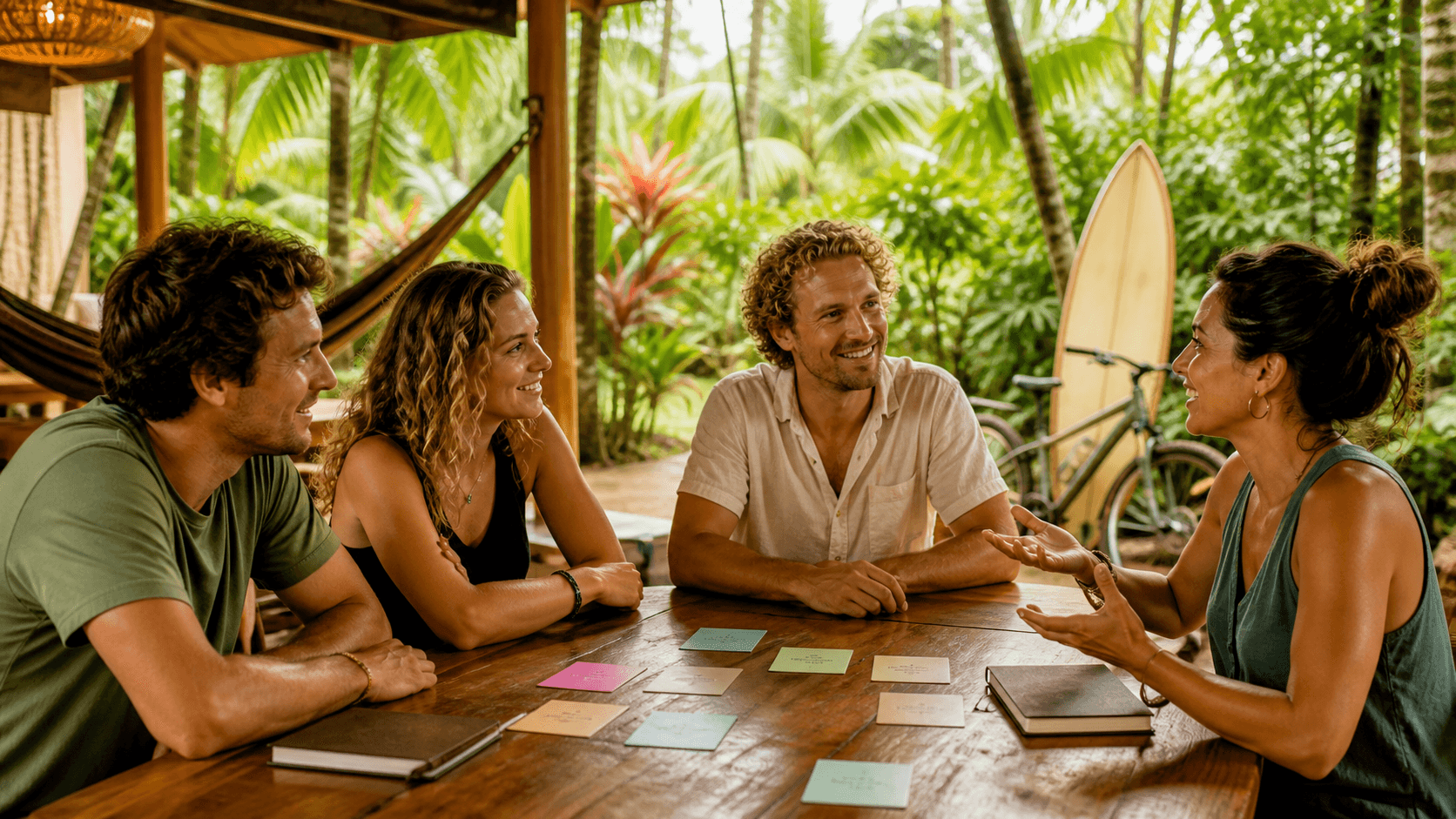
First, build a plan before you arrive. Ask yourself: What do I want Spanish for?
- Travel and daily life
- Professional and work meetings
- Talking with friends or family members
- A mix of fun and future goals
Share that with your teachers so class time connects directly to your life, not just generic tourist topics.
Next, focus on what you will actually use. High-return language often looks like:
- Frequent verbs that fit many situations
- Connectors like entonces, pero, porque, aunque
- Phrases for meetings, calls, or parent-teacher talks
Vacation words like snorkeling gear are fun, but everyday verbs and connectors are what keep you talking once you go home.
Finally, create a continuity strategy before you leave Nosara. Some helpful tools are:
- Online follow-up lessons with the same teacher
- WhatsApp voice notes a few times a week
- Shows, music, or podcasts in Spanish connected to topics you studied
- A simple weekly routine, such as one class, one movie, and one chat with a language partner
The goal is to turn your week into a base, not a one-time high. That way, when summer ends and life gets busy, your Spanish does not disappear with your tan.
When It Is Time to Stay Longer or Come Back
At some point, a lot of learners feel they are just dabbling. They do an app here, a weekend class there, a short-term Spanish course in Costa Rica every few years, and stay stuck at the same level.
That is usually the moment to think about a longer stay, something like 3 to 8 weeks. It starts to make sense when:
- You keep repeating the same beginner course
- You can survive, but not relax, in Spanish
- Career, relocation, or relationships clearly need stronger skills
The kind of extended program you choose matters too. Different styles serve different needs:
- Multi-week intensive classes for people who want steady, focused progress
- Surf and Spanish for learners who like to balance class with time in the water
- Yoga and Spanish for those who learn best in a calm, body-aware rhythm
- Medical or professional Spanish for people who need specific vocabulary
- Family immersion for parents and kids who want to learn and practice together
Staying longer also gives community immersion room to grow. In Nosara, that can mean:
- Joining local events or classes
- Surfing with locals and chatting between waves
- Living with a host family and sharing daily routines
- Finding small rituals, like the same café or fruit stand, where people start to know you
Spanish stops being just something that happens in a classroom. It becomes how you buy fruit, make friends, ask for help, and share small daily stories.
Turning One Short Course Into Lifelong Spanish Confidence
A short Spanish immersion in Costa Rica can change the way you feel about learning languages. It can show you that Spanish is not only grammar rules, it is sunsets, shared jokes, and the sound of kids playing soccer in the street. But that first week or two is only the spark.
Lasting confidence comes when you choose to stretch that spark. That might mean planning a longer stay next time, returning every year for a tune-up, or building a clear before, during, and after plan for your studies. At Nosara Spanish Institute, we see how powerful that choice can be. With time, community, and the right support, Spanish moves from something you study on vacation to a real part of your life, no matter where you are.
Make Real Progress With Spanish Before You Fly Home
If you are ready to turn your travel plans into meaningful Spanish skills, our short-term Spanish course in Costa Rica is designed for fast, practical results. At Nosara Spanish Institute, we focus on real-world communication that you can immediately use in local markets, cafes, and everyday conversations. Tell us about your goals and schedule, and we will recommend the best course option for you. To get started, simply contact us and we will help you plan your immersion experience.