Trade Whitewater for Real Conversation in Nosara
Surf-loving beginners hit a point where everything feels stuck. You catch whitewater but not many green waves. You know "hola" and "gracias," but real Spanish conversations slip by too fast. Late August in Nosara is a perfect time to break that plateau. The waves are consistent, the water is warm, and the town feels a bit calmer after the busiest weeks of the year.
When we mix Spanish classes with surfing, progress feels different. You are not just repeating phrases on a screen. You are asking about tides, chatting with the person waxing your board, and laughing with new friends at sunset. Small classes with native teachers, surf-focused lessons, and nearby lodging make it easier to "live" the language before and after your water sessions.
In this article, we will talk about what beginners gain from choosing a Spanish school in Nosara instead of learning only from apps or random phrases online. We will look at language progress, surf skills, local culture, and simple ways to keep your Spanish growing long after you fly home.
Why Surf-Loving Beginners Learn Faster in Nosara
Learning Spanish at home can feel flat. You tap through an app, you repeat sentences, but you rarely need those words right away. In Nosara, your Spanish connects directly to your surf day, and that changes everything.
Every simple surf task turns into practice time, such as:
- Renting a board or checking fin options
- Asking about the best tide for your level
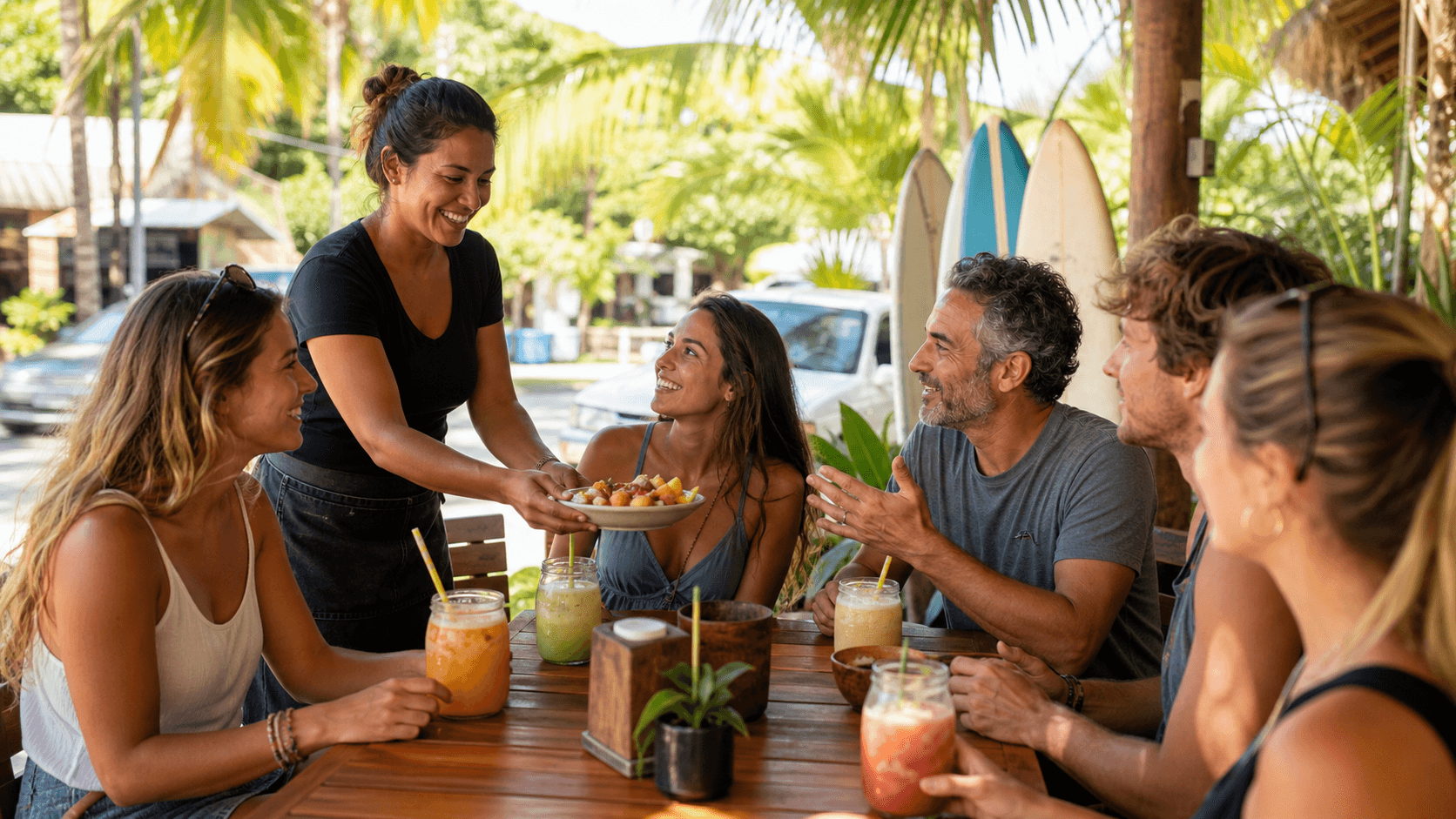
- Ordering breakfast after your early session
- Talking with locals about the swell for tomorrow
When you learn a new verb in class and then use it ten minutes later to ask about wave size, it sticks. Your brain ties the word to salt on your skin, wax on your hands, and the sound of the ocean in the background.
For beginners, "surf Spanish" is a big confidence boost. You learn how to:
- Ask about wave conditions and currents
- Talk about surf spots in simple language
- Understand basic safety tips and warnings
Knowing even a short list of phrases takes away a lot of stress. You feel less shy walking into a surf shop or paddling into a lineup with local surfers nearby.
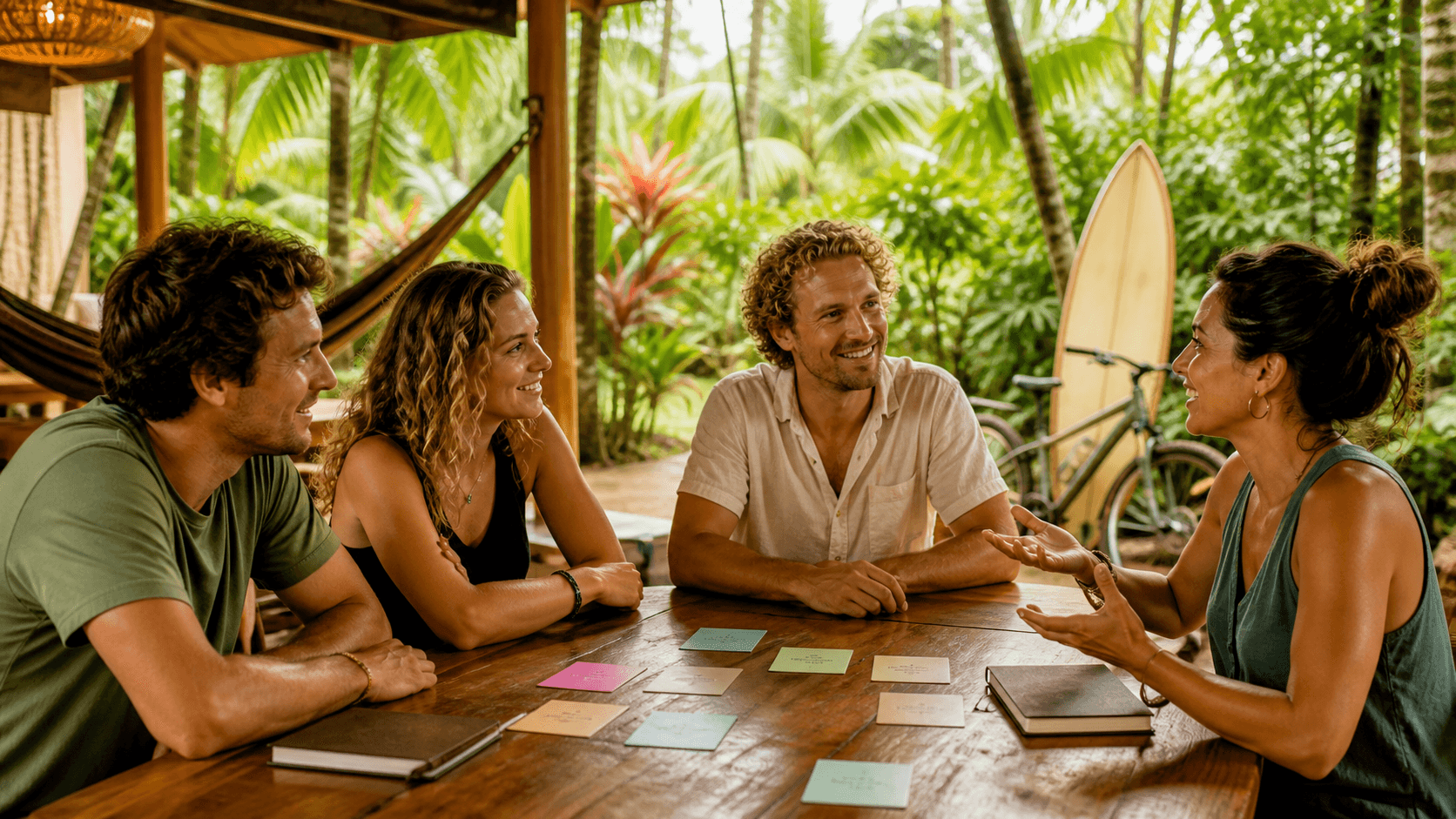
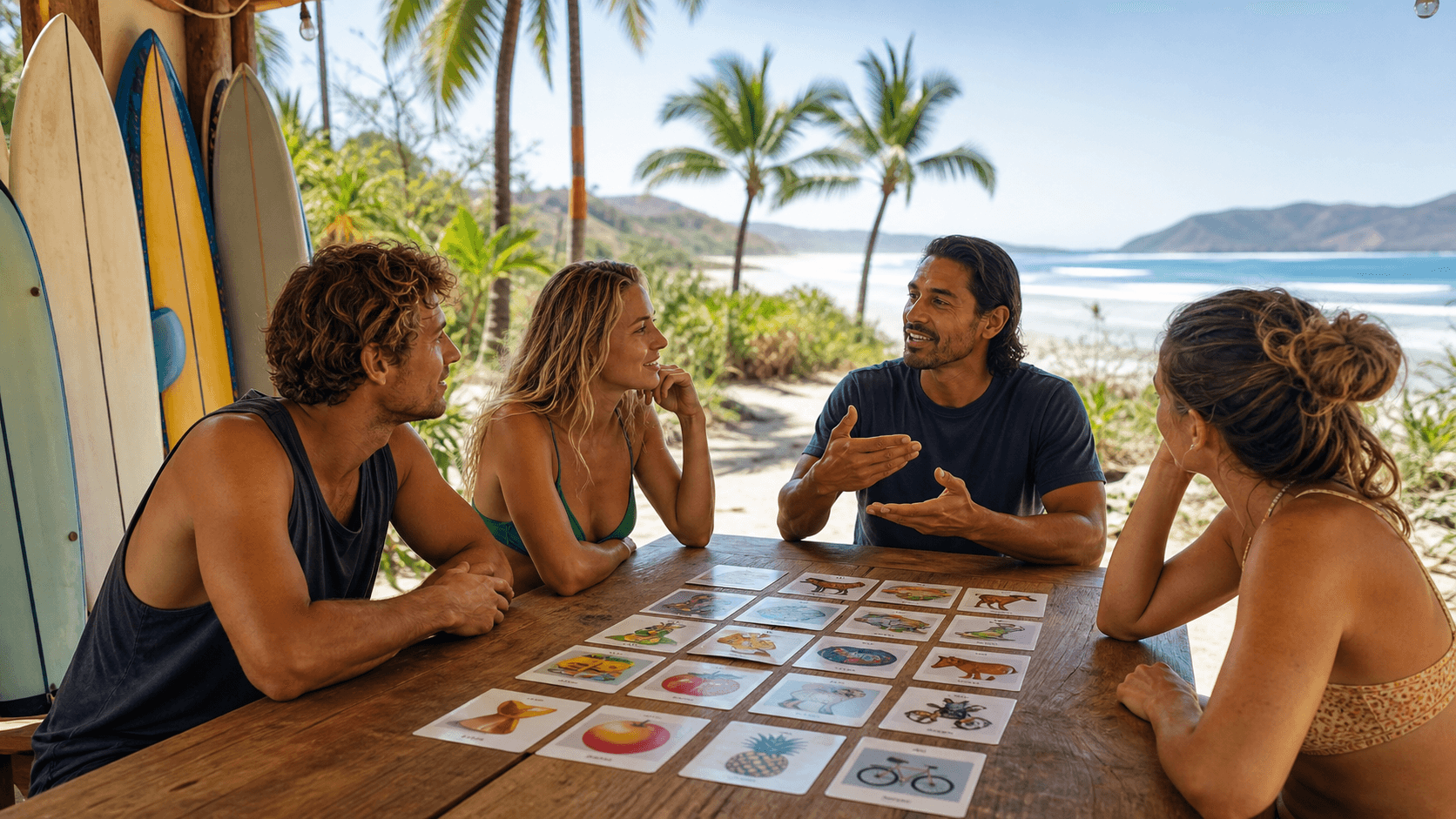
Small-group and private classes help too. True beginners need space to go slow, to repeat words, and to be corrected in a kind way. With a smaller group, your teacher can match the pace to your level, clear up tricky sounds, and focus on the vocabulary that supports your surf goals right now.
Catch More Waves with Surf-Focused Spanish Immersion
Now, let us zoom in on surf-focused programs. These are set up so that Spanish and surfing feed each other from the same daily rhythm.
A typical surf and Spanish day might look like:
- Morning: Spanish class with phrases about ocean conditions and gear
- Midday: Break for food, maybe practice ordering in Spanish
- Afternoon: Surf session where you hear those same words in real situations
In the lineup or on the beach, you are not just following hand signals. You can ask your surf coach what to fix in your pop-up. You can check if your stance looks okay. You can tell them if you feel tired or nervous and need a smaller wave.
This kind of clear communication leads to faster improvement, because you can:
- Ask very specific questions about timing and positioning
- Understand corrections the first time, in simple Spanish
- Talk through safety rules instead of guessing from context
Spanish surf terms also help keep you safe and calm. Words for current, swell, reef, sandbar, sets, and shorebreak tell you a lot about what is happening in the water. When you understand these words in your teacher's voice and then hear them again from local surfers, you start to read the ocean with more confidence, even at a brand new spot.
Living Pura Vida, Culture, Community, and Everyday Spanish
Language grows fastest when it becomes part of your normal day. That is why where you stay and how you move through town matters as much as what happens inside the classroom.
Different housing choices each gives you its own kind of Spanish practice:
- Homestays, where daily life happens in Spanish around meals and family time
- Shared student housing, where you mix English and Spanish with classmates
- Nearby rentals, where you practice with shopkeepers, drivers, and neighbors
Late August in Nosara has an easy, pura vida rhythm. People still work, surf, and meet up, but the town feels more relaxed than during the peak holiday crush. That slower pace helps beginners a lot. You get a little extra time to find your words, to laugh off mistakes, and to try the sentence again.
Culture is a big part of learning too. Outside of class, you might:
- Learn local surf etiquette, like how to share peaks kindly
- Join a yoga class and learn body-part words in Spanish
- Attend a small community event or beach cleanup
These simple moments give you new vocabulary that goes far beyond basic tourist phrases. You do not just memorize words for "table" and "chair," you learn how people greet each other, joke with friends, and talk about nature and the sea.
From Vacation to Lasting Skills, Making Progress Stick
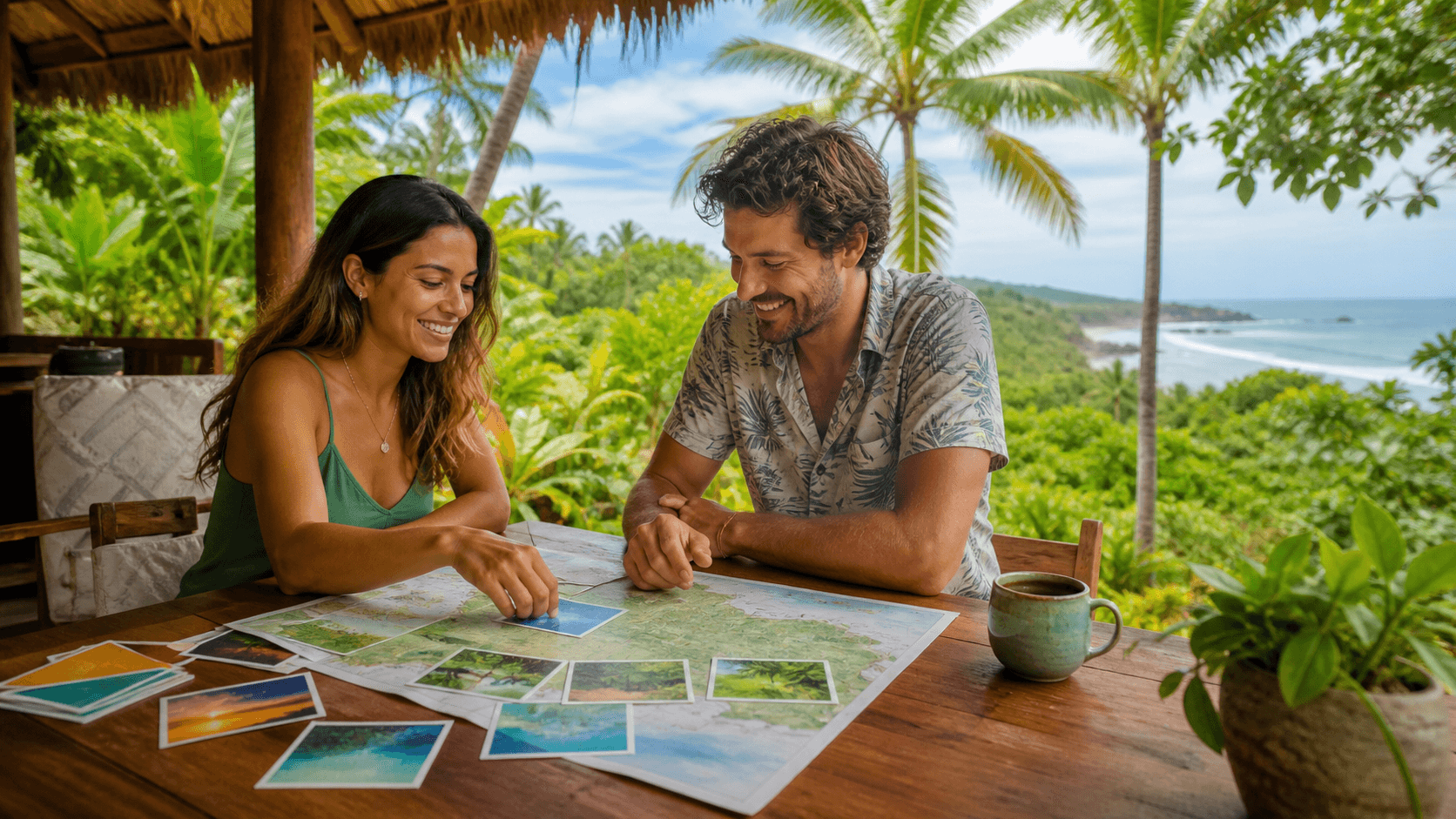
A surf and Spanish trip feels amazing in the moment, but it is even better when the progress lasts. A bit of planning before you land in Nosara makes a big difference.
Before your trip, it helps to:
- Set one or two clear goals, like "hold a 5-minute conversation about surfing"
- Choose a course length that gives you time to settle in
- Think about your energy so surf sessions and study time both feel fun
Surfing can leave you happily tired, so you want a study plan that respects that. Short, focused review after class, a nap, then a sunset paddle is often better than trying to push through long study marathons.
After you leave, you can keep growing your Spanish in simple, surfy ways, like:
- Joining online lessons with teachers you met in Nosara
- Writing short surf session notes in Spanish in a journal
- Finding language-exchange partners who also love the ocean
Because your Spanish is tied to strong physical memories, it tends to stick. Your brain links new words to the feeling of standing up on a wave, the sound of friends cheering, and the first time you cracked a joke in Spanish and everyone laughed with you. That mix of movement, emotion, and language is hard to forget.
Plan Your Nosara Surf and Spanish Adventure Now
Late August in Nosara lines up nicely for beginners who want to surf and learn. The Pacific stays warm, the waves are friendly for new surfers on many days, and the town offers plenty of quiet corners to study, nap, and reset between sessions.
When you choose a Spanish school in Nosara, you can look for programs that match your style, like surf-and-Spanish blocks, yoga and Spanish days, private lessons, or options for families who want to learn together. At Nosara Spanish Institute, we build small, focused classes with native teachers, surf-focused content, and accommodation options nearby, so your days can flow between classroom, ocean, and real life in Spanish with as little friction as possible.
Start Your Nosara Spanish Journey With Confidence
If you are ready to turn your time in Costa Rica into real language progress, our Spanish school in Nosara is here to guide you every step of the way. At Nosara Spanish Institute, we design each program around your goals so you can use Spanish confidently in daily life, travel, or work. Share a bit about your schedule and objectives through our contact page, and we will recommend the best course for you. Let us help you make your time in Nosara both unforgettable and truly immersive.