Why a Spanish Homestay in Costa Rica Changes Everything
Learning Spanish in a classroom is helpful, but it has limits. You can memorize verbs and pass quizzes, then still freeze when someone asks a simple question at a restaurant. A Spanish homestay in Costa Rica changes that, because Spanish is no longer an academic subject; it is the language you use to eat breakfast, share stories, and say goodnight. At Nosara Spanish Institute, homestay immersion turns what you study in class into real communication, which is where confidence finally clicks.
Our Spanish homestays in Costa Rica mean you live with a local family while taking small-group or private classes with us. You speak Spanish at the table, on the way to the store, and during relaxed conversations after dinner. Instead of watching culture from the outside, you are invited into it, hearing the rhythm of Costa Rican Spanish and seeing daily life up close. Many learners tell us that being welcomed into a family, being included in small household routines, and feeling part of a community is what makes their Spanish feel alive, not just correct on paper.
How Homestay Immersion Accelerates Your Spanish
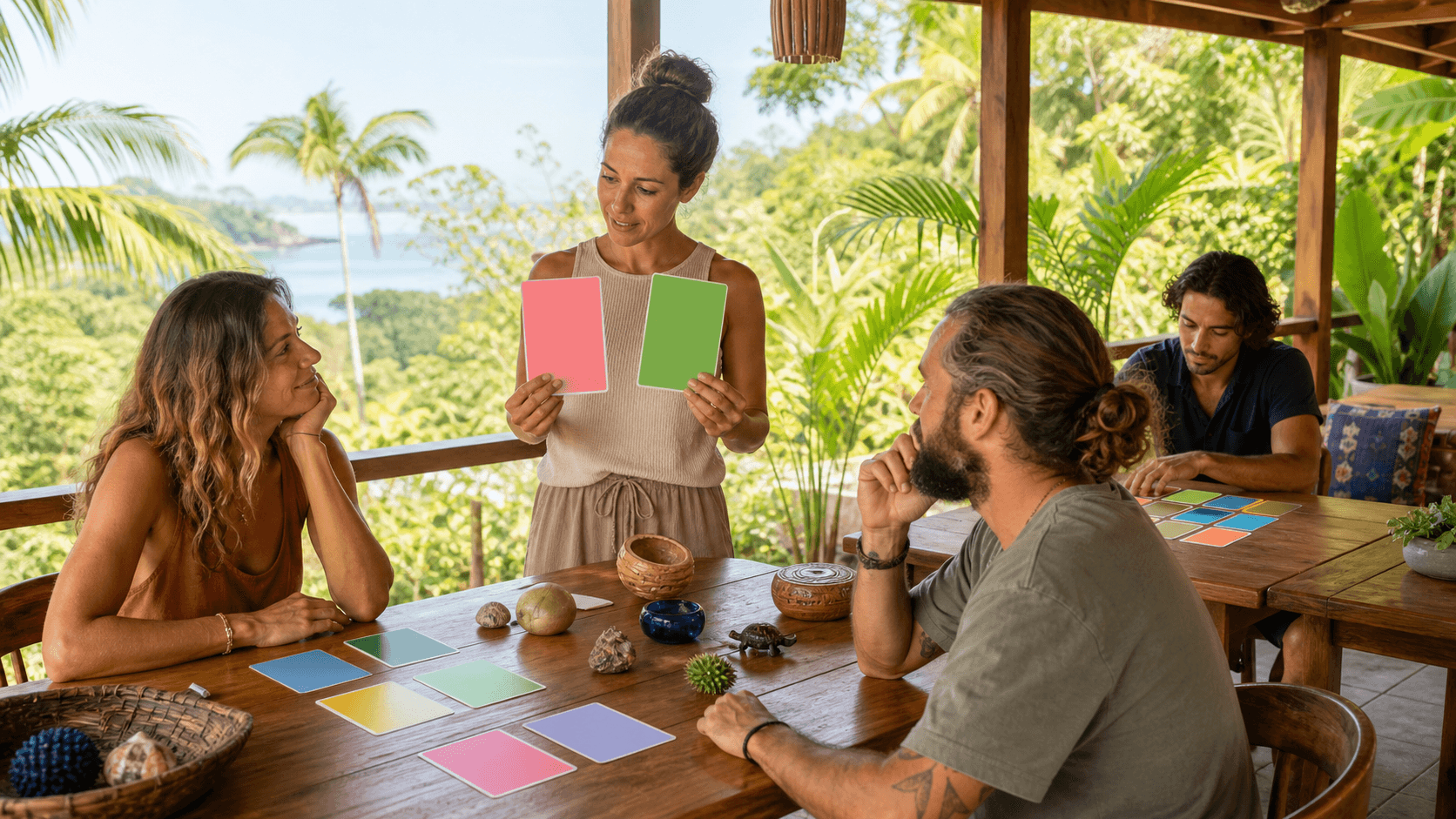
Homestay immersion works because Spanish surrounds you all day. In class at Nosara Spanish Institute, you focus on grammar, vocabulary, and speaking practice. Then you step back into your host family's home and immediately use what you learned. Asking for more coffee, talking about your afternoon plans, or asking how to say a new word in Spanish all become small but powerful practice sessions.
Constant exposure helps your brain connect patterns faster. Instead of repeating isolated phrases, you hear the same structures again and again in real sentences. You also hear how native speakers actually talk, including local phrases and shortened forms you might not find in a textbook. Over time, your ear starts predicting what comes next, which is the foundation of solid listening comprehension.
Making mistakes is part of this process. In a homestay, those mistakes happen in a supportive environment. Our host families are used to welcoming learners and are patient with slower speech and imperfect grammar. When you mix up words or get stuck, you can laugh, try again, and keep going, instead of shutting down from embarrassment. This relaxed repetition is exactly what builds fluency.
You also adjust to natural speed and accent differences. In class, we speak clearly so you can follow every word. At home, you hear Spanish at a more natural pace, with different family members, ages, and speaking styles. At first, this can feel challenging, but it is one of the main reasons a Spanish homestay in Costa Rica speeds up your progress.
Daily Life with a Costa Rican Host Family
A typical day in homestay life is simple but rich. You might start with breakfast at the kitchen table, greeting everyone and talking a bit about the day ahead. You practice easy phrases about sleep, weather, or plans, and you learn the natural greetings and expressions people actually use. Then you head to Nosara Spanish Institute for your classes, often by walking or biking through town, greeting neighbors as you go.
After class, you might have free time for the beach, yoga, or a coffee in town, depending on your chosen program and schedule. When you return home in the afternoon or evening, you reconnect with your host family. This is when casual conversations often flow more naturally, because you now have stories from your day to share in Spanish.
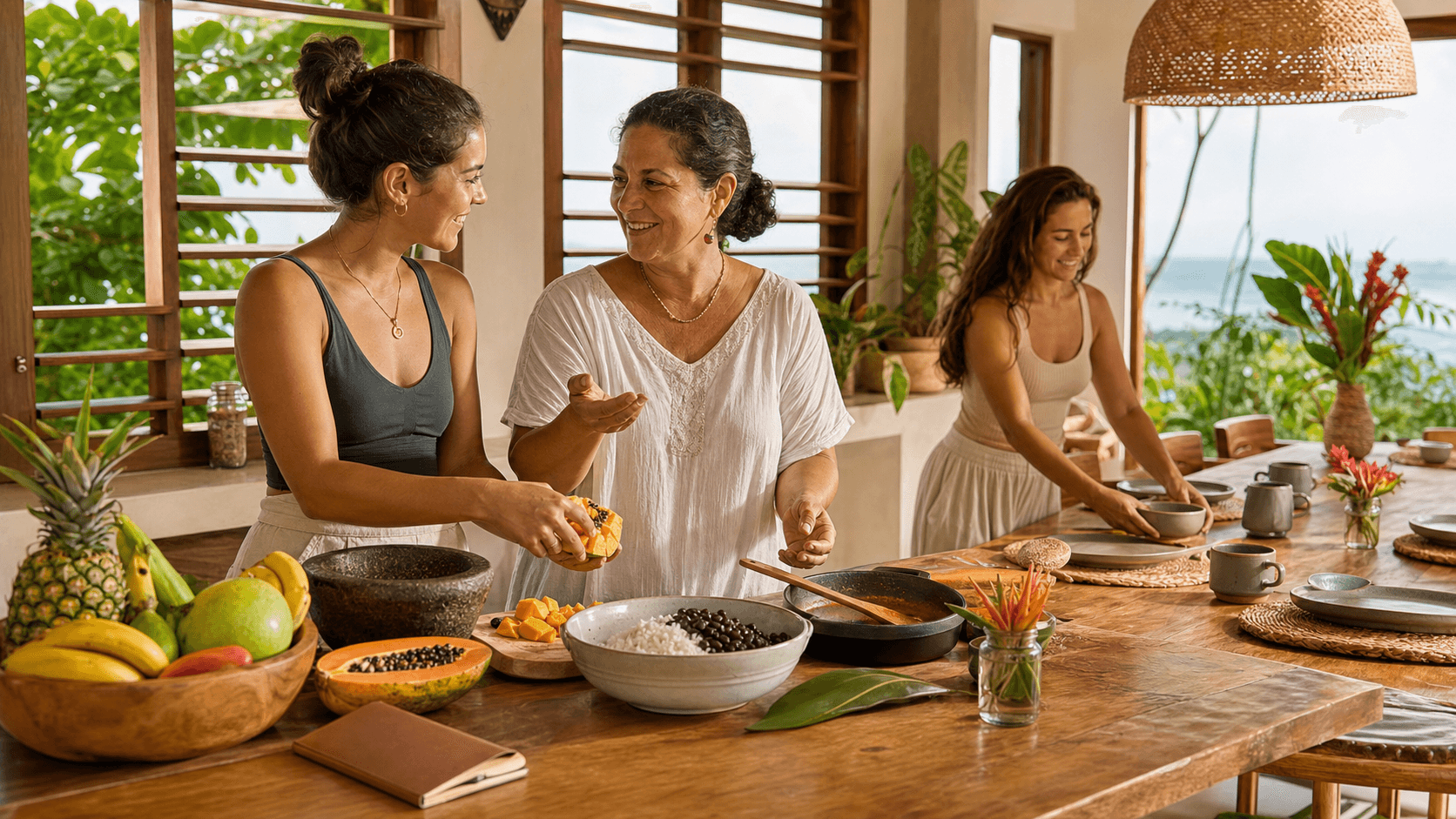
Meals are some of the best cultural immersion moments. You taste traditional dishes like gallo pinto and other local foods, learn the words for ingredients and utensils, and trade questions about life in Costa Rica and your home country. These shared meals often become the heart of the homestay experience, where language, culture, and personal connection meet.
At the same time, you still have your own space for rest, study, and reflection. Homestays at Nosara Spanish Institute are designed to balance privacy and connection. You have a room to retreat to, but you are also invited into family life, including celebrations or relaxed weekend activities when possible. This balance helps you stay energized instead of overwhelmed.
Choosing the Right Homestay Experience for You
Homestays fit many types of learners. Solo travelers who want to push their Spanish, digital nomads who can work remotely while improving their language skills, professionals who need more confident Spanish for work, and families who want a shared learning experience can all benefit from living with a local family.
At Nosara Spanish Institute, we pay attention to the details so your homestay in Costa Rica feels comfortable and supportive. When you apply, we look at your Spanish level, dietary needs, lifestyle, and the type of program you are interested in, such as surf and Spanish, yoga and Spanish, medical Spanish, or family programs. This helps us match you with a host family that fits your situation and learning goals.
Before you arrive, it helps to set clear expectations. You can think through topics like:
- Mealtime preferences and dietary needs
- Daily routines, including sleep and work schedules
- Comfort with pets or children in the home
- How much quiet time you need to rest or work
- Any specific cultural or religious practices
Being open-minded is key. House rules might be different from what you are used to, and daily routines can feel new. When you approach those differences with curiosity rather than comparison, they become opportunities for learning instead of sources of stress.
Combining Homestay with Surf, Yoga, or Specialty Programs
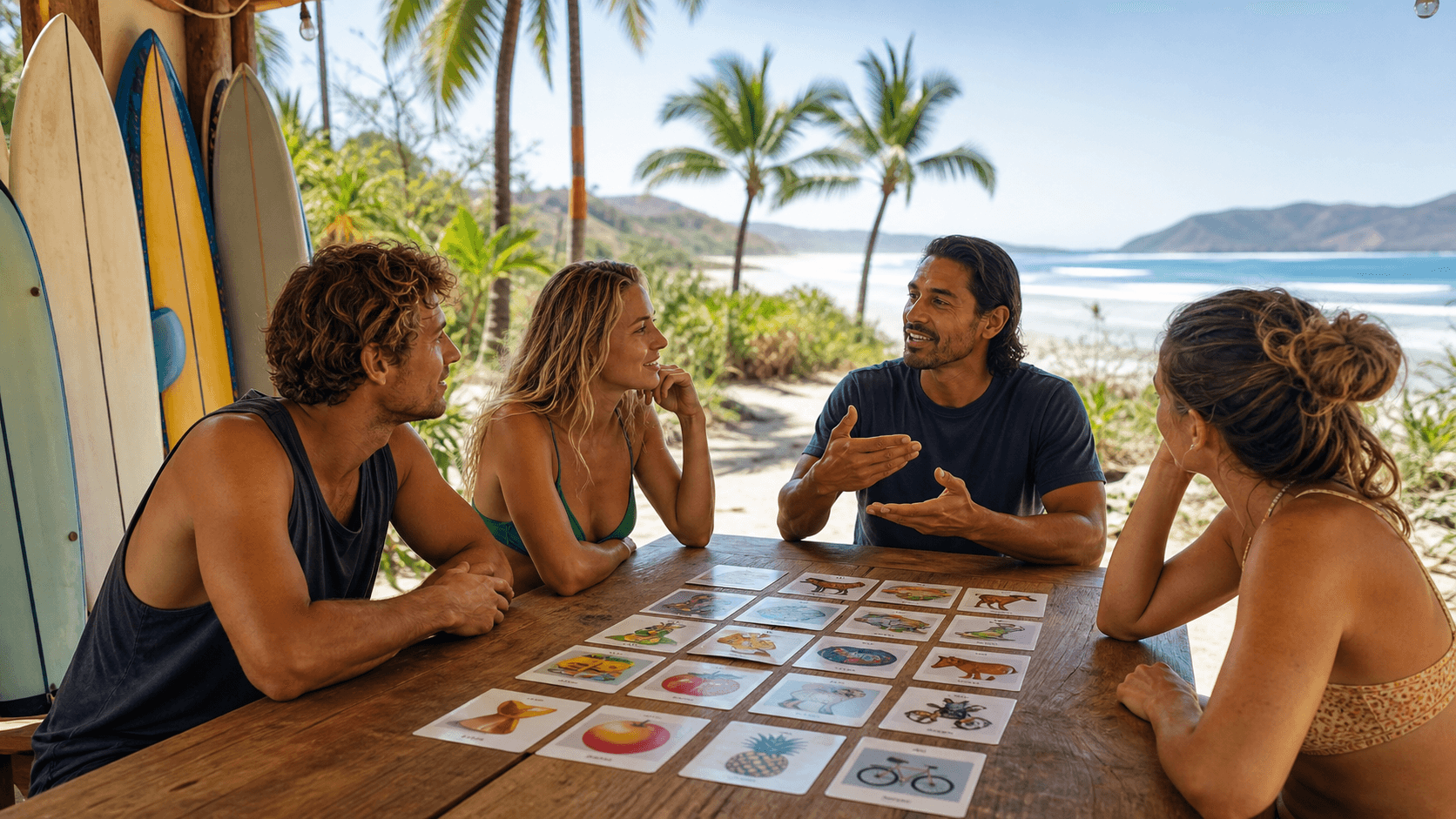
One of the special aspects of our Spanish homestay in Costa Rica is how easily it pairs with themed programs. Nosara is known for its beaches and wellness atmosphere, and we offer options like surf and Spanish or yoga and Spanish that fit naturally into that lifestyle. You can spend part of your day learning Spanish, part in the water or at a yoga studio, and then return home to continue conversations in Spanish with your host family.
Specialty programs like medical Spanish or family programs also gain a lot from homestays. If you are studying medical vocabulary, for example, you get extra chances to explain symptoms, talk about health, or ask your host about real-life situations in Spanish. Families with children can practice new words together at the table, turning homework into a shared activity instead of a solo task.
Nosara's relaxed, safe, and friendly environment supports all of this. Being close to the beach, surrounded by a culture that values wellness and connection, makes it easier to focus on learning. You are not rushing through a crowded city every day. You have space to breathe, reflect, and actually enjoy the process of improving your Spanish.
Making the Most of Your Homestay Experience
There are simple habits that can help you get more out of your homestay. A few practical tips include:
- Use short, simple sentences instead of waiting for the perfect phrase
- Keep a small notebook or digital note for new words from family conversations
- Ask your hosts to repeat or speak a bit slower when you need it
- Request gentle corrections so you keep improving without feeling discouraged
- Review new vocabulary each night, using examples from your day
Participation matters as much as grammar. Helping set the table, going along for a walk to the store, or joining a casual family outing all create chances to hear and practice natural Spanish. If you are shy, you can start with small steps, like asking one new question at dinner each night.
It is normal to worry about language gaps or cultural misunderstandings. Everyone in this situation is learning. At Nosara Spanish Institute, we support both students and host families throughout the stay. If something feels confusing, you have a school community to talk it through, adjust expectations, and keep your experience positive.
A Spanish homestay in Costa Rica is more than a place to sleep. It is a daily invitation to connect, to make mistakes and laugh about them, and to see how language can open doors into real relationships. When you share life, even for a short time, with people from a different culture, your Spanish grows, but so does your perspective on how you travel, communicate, and belong in a new place.
Experience Authentic Spanish Immersion In Nosara
If you are ready to take your skills beyond the classroom, our curated Spanish homestay in Costa Rica gives you daily real-world practice with local families and expert teachers. At Nosara Spanish Institute, we help you build confidence in speaking, listening, and cultural understanding from the moment you arrive. Tell us about your goals and schedule, and we will recommend the ideal program length and homestay option. Have questions about availability or next steps, or want help choosing dates, simply contact us.