Learn Spanish Faster with Local Insight in Nosara
Learning Spanish with native Spanish teachers in Costa Rica turns the language from something in a book into something you can actually use. You are not just memorizing verbs; you are getting ready to order lunch, chat with a taxi driver, or ask about the surf. That is why the teachers you choose matter so much.
When you arrive in Nosara around July, the hills are bright green, the air feels fresh after the afternoon rain, and the sound of the waves mixes with howler monkeys in the trees. The town has an easy pura vida rhythm, and Spanish is all around you in shops, cafes, and on the beach. In this kind of place, local teachers can pull real-life straight into your lessons.
At a dedicated immersion school in Nosara, native teachers blend language, culture, and daily life. Classes feel connected to what you are doing the same day, so you build confidence fast. We will walk through how native teachers teach differently, why Costa Rica and Nosara are such smart choices for mid-year travel, and what a normal study day can look like when everything supports your Spanish.
How Native Costa Rican Teachers Shape Real Fluency
Native Spanish teachers in Costa Rica grow up with the sound and rhythm of the language in their ears. That natural feel is hard to copy. It affects how they speak in class, how they correct you, and how they choose phrases for you to learn.
Instead of only teaching textbook examples, local teachers pull in everyday situations like:
- Ordering a casado or a fresh fruit juice
- Asking for directions to the beach or a trail
- Greeting neighbors on your way to class
- Talking with a driver about where you need to stop
These moments are simple, but they are the heart of real communication. When practice matches real life, your brain connects words to actions and places, not just to a page.
Native teachers also bring in regional accents and tico phrases so your ear gets stronger. Hearing different natural voices prepares you to understand Spanish speakers from other parts of Latin America too. Along the way, teachers gently adjust the things that sound a bit off. Maybe your sentence is correct, but too formal for a beach town, or the word order sounds like a direct copy of English. A native teacher can say, "We would say it like this instead," and suddenly your Spanish sounds more local and more relaxed.
Immersion That Starts in the Classroom and Spills Outside
Good immersion does not end when class finishes. In Nosara, the goal is to start in the classroom, then carry your Spanish into the rest of your day.
Many students like a rhythm where they have morning classes, then put those new words to work in the afternoon. You might:
- Order lunch in Spanish at a local soda
- Practice small talk with shopkeepers
- Join guided activities where the teacher pushes you to keep speaking
- Try new phrases with friends from class on the way to the beach
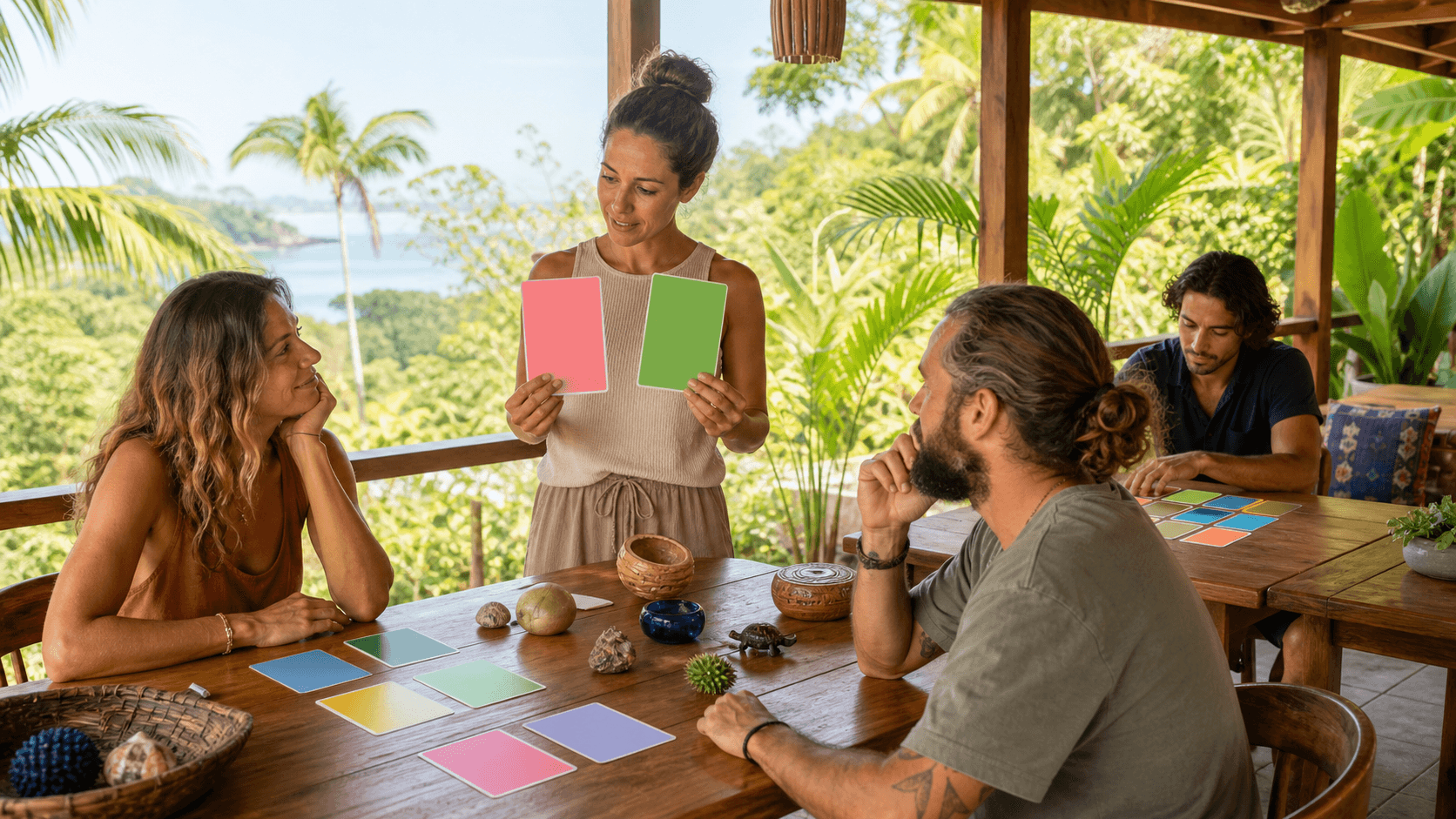
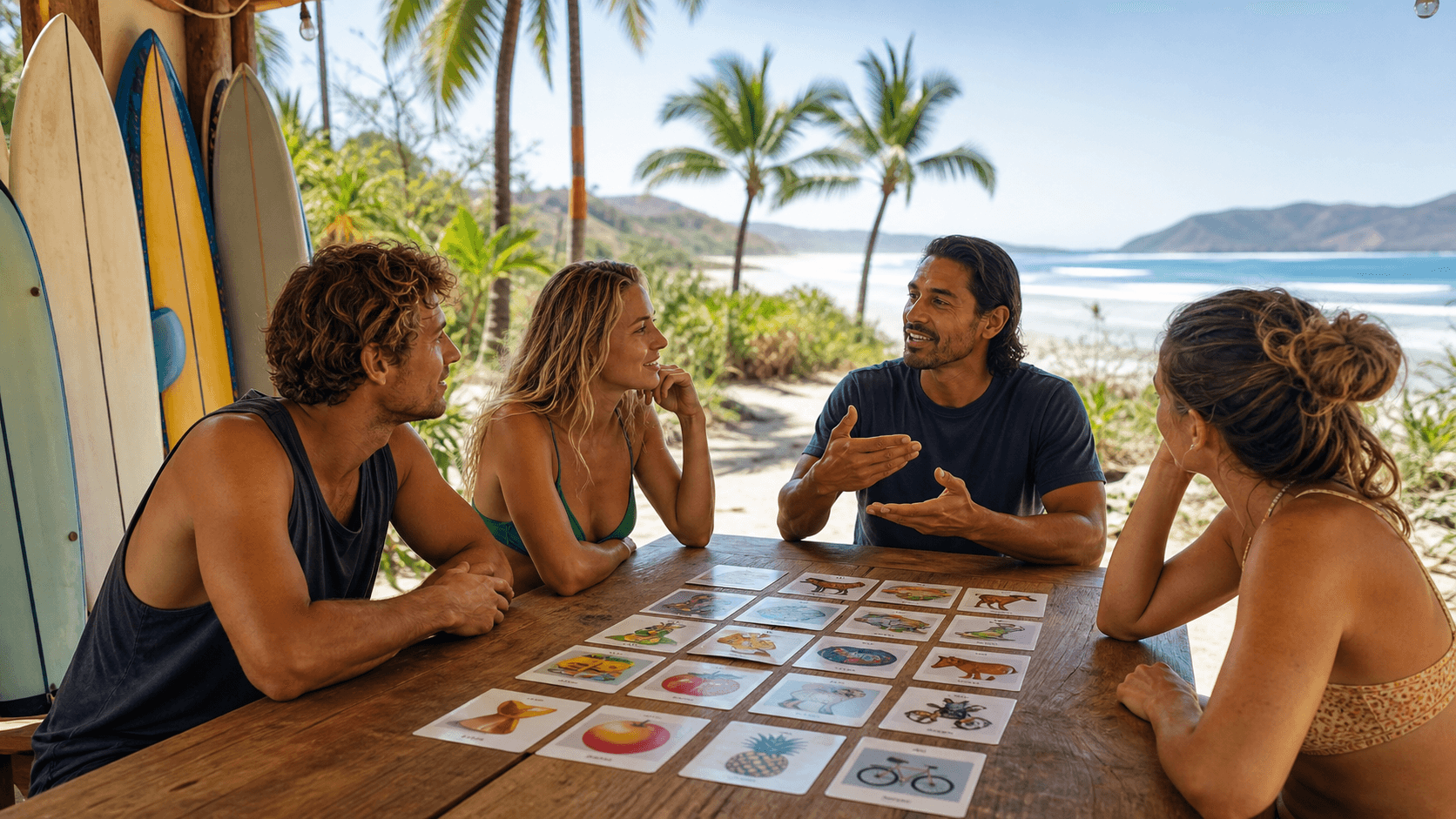
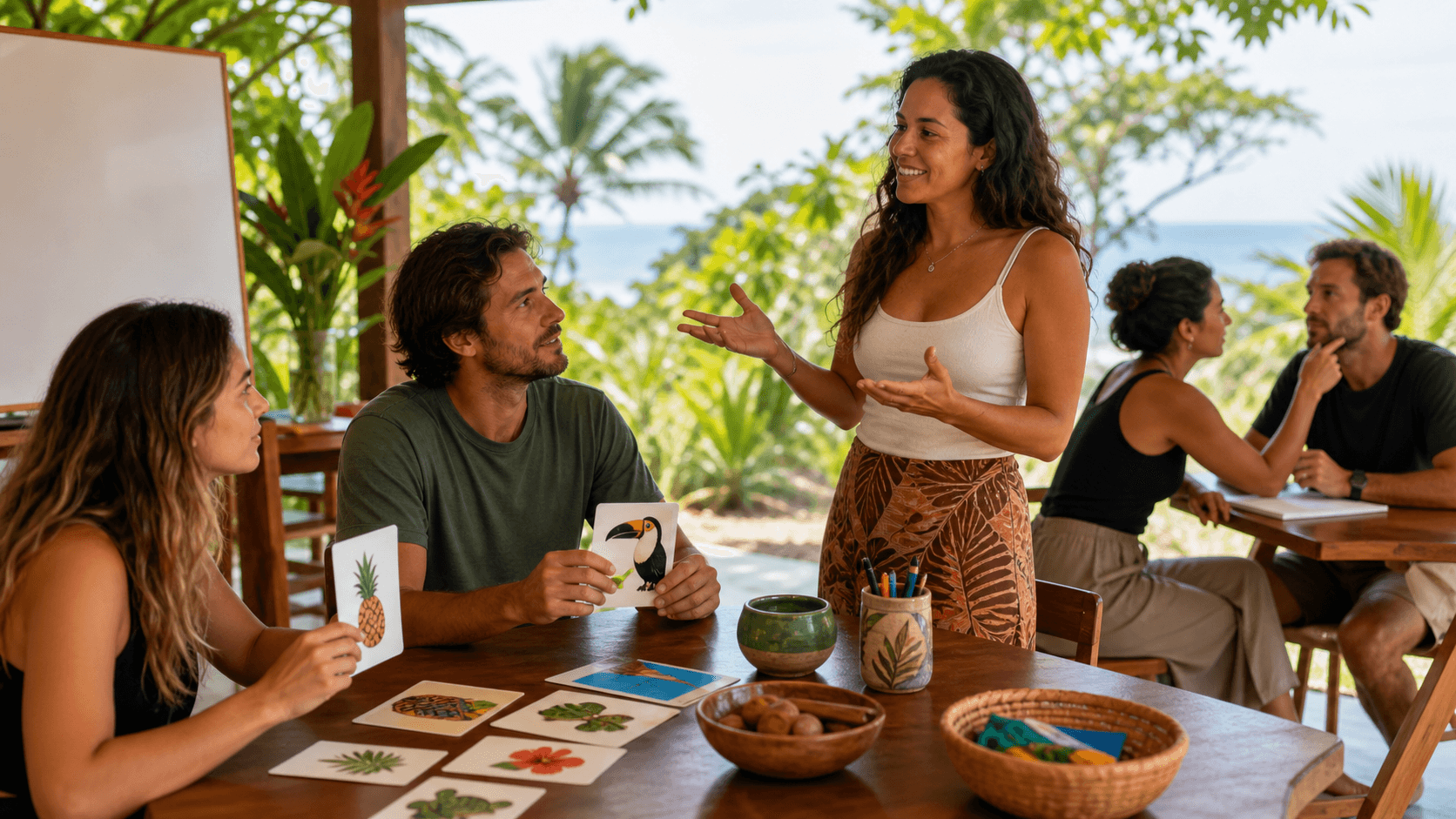
Native teachers often keep a Spanish-first rule in class, but they do it in a friendly, clear way. They use gestures, drawings, real objects, and step-by-step examples so beginners do not feel lost. Instead of switching right to English, they find creative ways to help you understand in Spanish, which trains your brain to think in the language.
Small-group and private classes make it easier for teachers to watch each person and adjust. They can slow down for one topic, speed up for another, or recycle key vocabulary through things Nosara is known for, like surfing, wildlife, and sustainable tourism. Around July, many people travel on school or work breaks, so teachers also bring in seasonal topics like local events, holiday plans, and typical afternoon rain patterns to keep conversation fresh and real.
Culture, Slang, and Subtle Nuances You Cannot Google
Language and culture always move together. Native Spanish teachers in Costa Rica do not just teach words, they help you feel how people here think and live. That includes tico values like pura vida, respect for others, and the sense of community in a small town.
You learn how people actually greet each other, how long is polite to chat, and how flexible time can be in a relaxed beach area. These small cultural rules are hard to search online, but they matter a lot in homestays, local rentals, or everyday errands.
Teachers also open the door to slang in a safe and smart way. You might hear filler words and local expressions like:
- Diay, a common little word that buys you time while you think
- Mae, used between friends the way some people say "dude"
- Qué chiva, to say something is really cool
Native teachers explain when these words are friendly and welcome, and when it is better to stay neutral or more formal. They also explain tone and body language, so you do not accidentally sound rude, too direct, or too distant.
Stories, jokes, and idioms from Costa Rican life make lessons feel human. When a phrase is tied to a funny moment or a short story, you remember it much longer than if you only saw it in a list. That connection helps you feel less like a visitor and more like a temporary local.
Personalized Learning Around Your Costa Rica Adventure
Another thing native Spanish teachers in Costa Rica do differently is shape lessons around the kind of trip you are taking. People come to Nosara for many reasons, and your Spanish should support those plans, not fight them.
Teachers can aim your practice at different goals, such as:
- Digital nomads who need to handle daily life and some work chats
- Travelers on a short vacation who want key phrases and confidence
- Families who want to share class time and practice together
- Long-term visitors who plan to keep building level by level
Specialty programs, like surf and Spanish, business Spanish, or exam preparation, feel more real when a local teacher knows the words people actually use in those settings. Class might include role-plays on talking with surf instructors, dealing with travel plans, or handling daily questions in a shared workspace.
Good teachers also look at your daily schedule. If you surf at sunrise, have yoga at midday, or plan weekend trips around Guanacaste, they can tie these plans into tasks and conversation. That way, Spanish wraps around your trip instead of pulling you away from it. Starting or growing your Spanish around July can give you a nice boost that carries into the rest of your travels for the year.
Bring Your Spanish to Life in Nosara This Year
Native Spanish teachers in Costa Rica turn passive knowledge into active conversation. With local insight, cultural context, and constant real-world practice, Spanish stops feeling like a school subject and starts feeling like a tool you can use every hour of the day.
In Nosara, the mix of small-town life, green hills, ocean sounds, and relaxed pura vida energy creates a friendly place to learn. At Nosara Spanish Institute, our native teachers connect your classes to your meals, your hobbies, and your adventures, so every day gives you new chances to speak. When you arrive ready to learn, and we bring local knowledge and patience, your Spanish can grow faster than you might expect.
Start Your Costa Rica Spanish Immersion Journey Today
Experience the impact of learning with our expert native Spanish teachers in Costa Rica who tailor each session to your goals and level. At Nosara Spanish Institute, we combine structured lessons with real-life practice so you can confidently use Spanish in everyday situations. If you are ready to plan your immersion program or have questions about the best option for you, simply contact us and we will help you get started.